

MDMA
MDMA (3,4-methylenedioxymethamphetamine) is a synthetic substance that acts mainly by releasing serotonin in the brain; it is classed as an entactogen rather than a classic psychedelic. It is being studied as MDMA-assisted therapy, which combines the drug with psychotherapy, mostly in post-traumatic stress disorder (PTSD). It is not authorised as a medicine in the European Union or in Portugal.
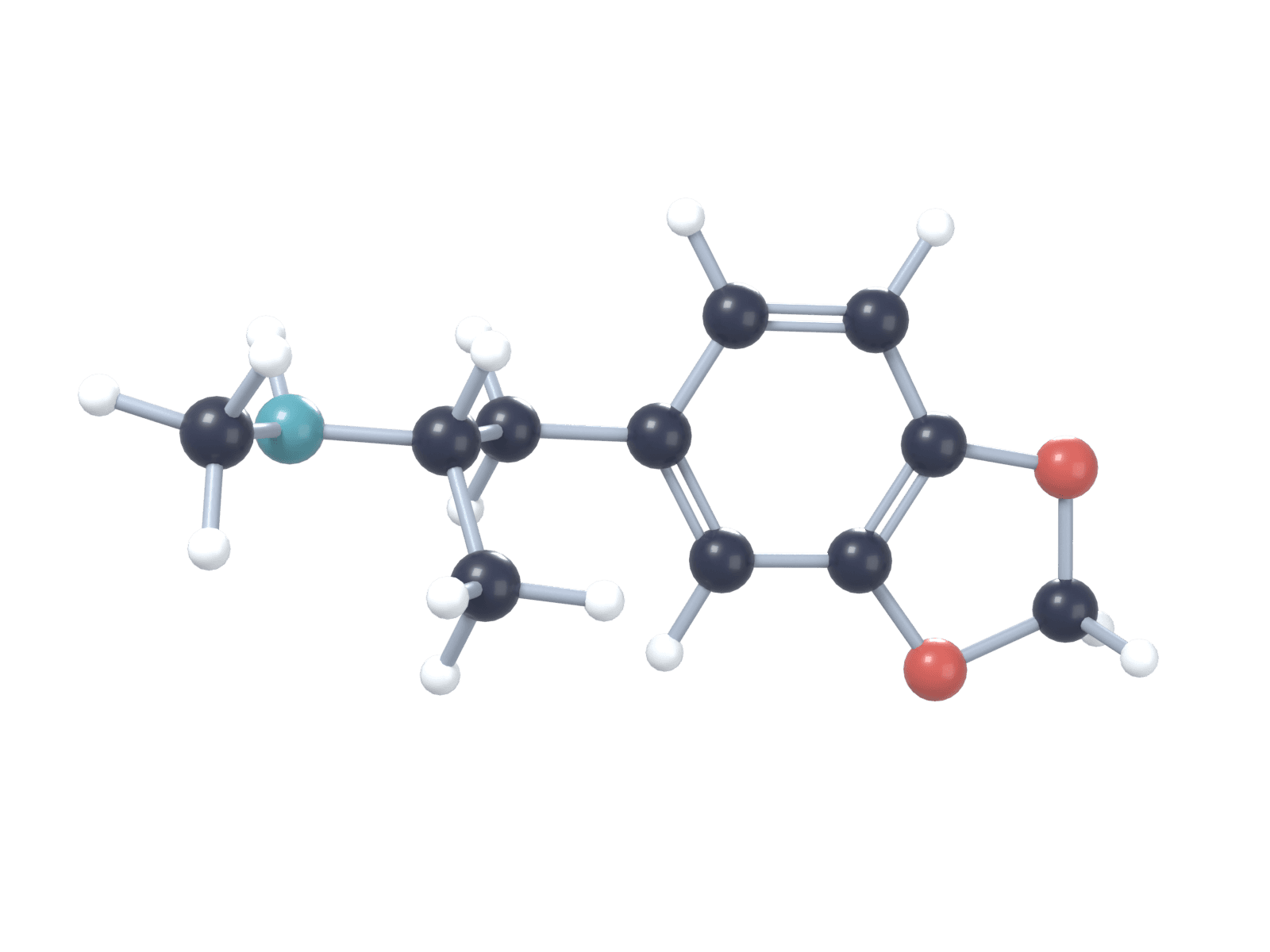
Drag to rotate.
What is MDMA?
MDMA is a synthetic molecule related to the amphetamines. In regulatory documents it appears under its international non-proprietary name, midomafetamine [1].
It belongs to the entactogens. Compared with classic psychedelics, the state it produces is shorter and easier to tolerate, with emotional openness and a feeling of connection with others [2].
MDMA bought on the illicit market has uncertain content and strength. That use cannot be compared with controlled administration in trials [2].
What is MDMA-assisted therapy?
MDMA-assisted therapy is an experimental treatment. The drug is taken only a few times, in long sessions attended by therapists, as part of a psychotherapy programme.
The idea is that MDMA makes traumatic memories easier to revisit without the person being overwhelmed by fear. What is being tested is the combination with psychotherapy, not the drug on its own [3].
For now the model exists only in clinical trials or in special access schemes such as Australia’s [4].
How did MDMA research develop?

Merck works in Darmstadt, c. 1886
MDMA was first made in 1912 and reached psychotherapy only decades later. After it was banned in 1985, clinical research returned with controlled trials published from 2011 onwards.
- 1912. The German pharmaceutical company Merck synthesised MDMA as an intermediate in another synthesis and did not test it in people. The claim that it was meant as an appetite suppressant finds no support in the company archives [5].
- 1976–1978. The chemist Alexander Shulgin re-synthesised it and, with David Nichols, published the first paper on its effects in humans. From 1977 the psychotherapist Leo Zeff used it as an adjunct to psychotherapy [6].
- 1985. As recreational use grew, the United States placed MDMA in Schedule I of controlled substances [2]. It is now also in Schedule I of the 1971 UN Convention [7].
- 2011–2018. A first randomised placebo-controlled pilot trial and then phase 2 dose-comparison trials found larger symptom reductions with MDMA [8] [9] [10].
- 2021 and 2023. The phase 3 trials in post-traumatic stress disorder were published [11] [12].
- 2023. From 1 July, Australia allowed authorised psychiatrists to prescribe MDMA for PTSD [4].
- 2024. In June the FDA advisory committee voted against; in August the FDA did not approve the application [13] [14]. That same month a journal retracted papers based on the phase 2 trials [15].
- 2026. In August 2026 it was reported that the sponsor had resubmitted its application to the FDA without a new phase 3 trial; the company has not confirmed this publicly and the FDA has not announced a decision [16] [17].
How does MDMA work?
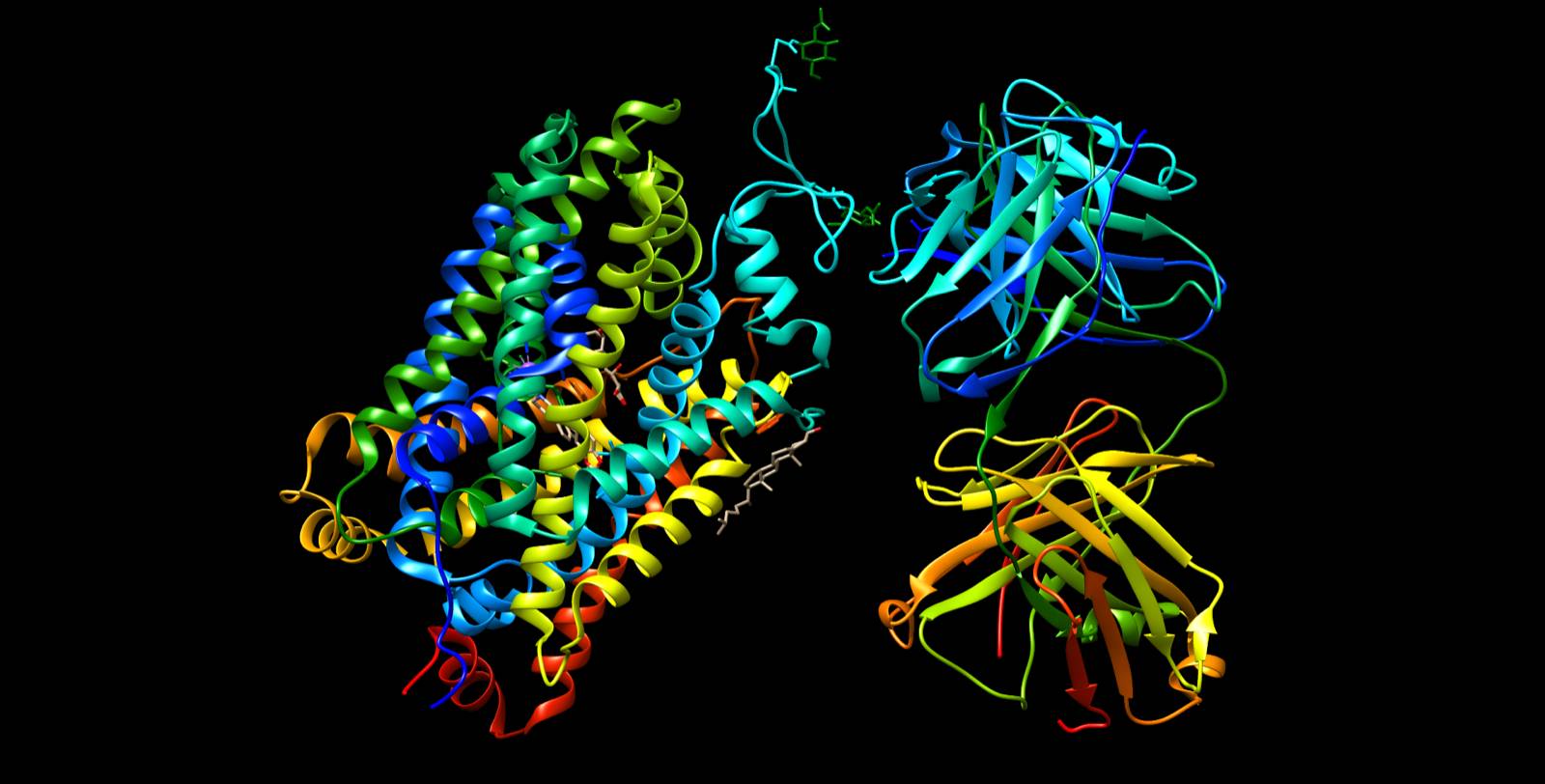
Serotonin transporter, SERT (crystal structure)
MDMA makes neurons release serotonin and noradrenaline and, to a lesser degree, dopamine [2]. It does so by reversing the transporters for these chemicals, which then push them out instead of taking them back up.
- Serotonin. In healthy volunteers, an antidepressant that blocks the serotonin transporter reduced most of MDMA’s psychological effects [18].
- Oxytocin. MDMA raises blood oxytocin, and the rise tracked volunteers’ feelings of closeness. This is an association, not a proven explanation [19].
- Traumatic memories. The most cited hypothesis is that MDMA damps activity in fear-related regions such as the amygdala and helps the reprocessing of trauma. It rests mainly on animal studies and work in healthy volunteers [3].
How does MDMA-assisted therapy work in trials?
In the phase 3 trials, treatment took about 18 weeks and alternated drug-free sessions with MDMA or placebo sessions. A two-person therapy team was present throughout [11] [12].
- Preparation. Drug-free sessions to build trust and prepare for the memories and feelings that may come up [11].
- MDMA or placebo sessions. Three sessions of about eight hours, roughly a month apart; vital signs were checked before discharge [11].
- Integration. Psychotherapy sessions after each drug session, to make sense of the experience [12].
Psychiatric medicines were stopped beforehand under medical supervision. Symptoms were rated by independent assessors who did not know which group each participant was in [11].
Which conditions is it being researched in?
Post-traumatic stress disorder is the only condition with phase 3 trials. The other areas are exploratory and rest on small studies.
| Condition | Where it has been studied | Evidence | Phase |
|---|---|---|---|
| Post-traumatic stress disorder | United States, Canada and Israel [11] [12] | Phase 3 trials completed; not approved by the FDA [14] | Phase 3 |
| PTSD in couples | Small uncontrolled study [20] | Preliminary | Exploratory |
| Social anxiety in autistic adults | United States, pilot trial [21] | Preliminary | Exploratory |
| Alcohol use disorder | United Kingdom, open-label study [22] | Preliminary | Exploratory |
PTSD. In the phase 3 trials, symptoms fell more with MDMA than with placebo, and both groups received the same psychotherapy [11] [12]. By the end of the second trial, more participants in the MDMA group no longer met diagnostic criteria [12].
Other areas. Small studies reported improvements in couples where one partner had PTSD and in social anxiety in autistic adults [20] [21]. In alcohol use, the main aim was to assess safety [22]. Larger controlled studies are still needed.
What are the known risks?
In the trials, with selected participants in controlled settings, the most common adverse effects were short-lived: muscle tightness, reduced appetite, nausea, sweating and feeling cold [11]. Teeth grinding, restlessness and blurred vision were also reported [12].
- Heart. MDMA briefly raises blood pressure and heart rate; the trials excluded uncontrolled hypertension and arrhythmias [11].
- Temperature. Small, transient rises occurred in the trials [11]; outside clinical settings, severe hyperthermia is a recognised complication [23].
- Blood sodium. MDMA can cause hyponatraemia, which is rare but can be fatal, and is more frequent and more severe in women [24].
- Interactions. With monoamine oxidase inhibitors it can cause serotonin syndrome, and deaths have been reported [25] [26]. Selective serotonin reuptake inhibitors blunt its effects [18].
- Illicit products. Samples tested in several European countries, Portugal among them, showed variable purity and new psychoactive substances mixed in [27].
The trials excluded people with psychotic disorders, bipolar I disorder, pregnancy or active substance use disorders [11]. Their findings do not apply to these groups.
What is the legal status of MDMA?
No medicine containing MDMA is authorised in the European Union or in Portugal [28]. Internationally, MDMA is under the strictest level of control.
- United Nations. Schedule I of the 1971 Convention on Psychotropic Substances [7].
- Portugal. Listed in schedule II-A of Decree-Law 15/93; outside authorised research, its use has no standing as a treatment [29] [30].
- Australia. Since 1 July 2023, authorised psychiatrists may prescribe it for PTSD with ethics committee approval; the regulator stresses that it has not evaluated any MDMA product [4].
- United States. MDMA remains in federal Schedule I and is not FDA-approved [31] [14]. In August 2026 it was reported that the sponsor had resubmitted its application to the FDA without a new phase 3 trial; the company has not confirmed this publicly and the FDA has not announced a decision [16] [17].
What is still being researched
Research is now focused on the questions the FDA and its advisory committee raised in 2024 [14] [13]. The answers will help to show what place, if any, MDMA-assisted therapy can have.
- Blinding and expectation. MDMA’s effects are easy to recognise, and most participants could tell which group they were in [12]. New trial designs aim to measure expectation from the outset [14].
- Durability. How long the benefit lasts and whether treatment needs repeating [14].
- Safety data. Complete recording of adverse events, laboratory tests and cardiac assessment [14].
- Misuse potential. Proper recording of effects experienced as “positive”, which are needed to assess this risk [14].
- The role of psychotherapy. How much of the benefit comes from MDMA and how much from psychotherapy; committee members suggested a factorial design to separate them [13].
- Who takes part. Many participants had used MDMA before, which limits generalisability; the FDA suggested keeping that number low [14].
The FDA set out a path: a new randomised, double-blind trial with longer follow-up [14]. Until then, MDMA-assisted therapy remains an investigational treatment.
Content reviewed by the KETAMED® clinical team, under medical direction, on .
References
31
- U.S. Food and Drug Administration. Global Substance Registration System, UNII KE1SEN21RM: “midomafetamine [INN]”, “MIDOMAFETAMINE [USAN]” (racemic 3,4-methylenedioxymethamphetamine). precision.fda.gov (opens in a new tab)Regulatory source
- Sessa B, Higbed L, Nutt D. A review of 3,4-methylenedioxymethamphetamine (MDMA)-assisted psychotherapy. Front Psychiatry. 2019;10:138. doi:10.3389/fpsyt.2019.00138 (opens in a new tab)Review
- Feduccia AA, Mithoefer MC. MDMA-assisted psychotherapy for PTSD: are memory reconsolidation and fear extinction underlying mechanisms? Prog Neuropsychopharmacol Biol Psychiatry. 2018;84(Pt A):221–228. doi:10.1016/j.pnpbp.2018.03.003 (opens in a new tab)Review
- Therapeutic Goods Administration (Australia). Change to classification of psilocybin and MDMA to enable prescribing by authorised psychiatrists (effective 1 July 2023). tga.gov.au (opens in a new tab)Regulatory source
- Freudenmann RW, Oxler F, Bernschneider-Reif S. The origin of MDMA (ecstasy) revisited: the true story reconstructed from the original documents. Addiction. 2006;101(9):1241–1245. doi:10.1111/j.1360-0443.2006.01511.x (opens in a new tab)Study
- Benzenhöfer U, Passie T. Rediscovering MDMA (ecstasy): the role of the American chemist Alexander T. Shulgin. Addiction. 2010;105(8):1355–1361. doi:10.1111/j.1360-0443.2010.02948.x (opens in a new tab)Study
- International Narcotics Control Board. List of psychotropic substances under international control (“Green List”), 2026 edition: MDMA is listed among the substances in Schedule I of the 1971 Convention on Psychotropic Substances. incb.org (opens in a new tab)Regulatory source
- Mithoefer MC, Wagner MT, Mithoefer AT, et al. The safety and efficacy of ±3,4-methylenedioxymethamphetamine-assisted psychotherapy in subjects with chronic, treatment-resistant posttraumatic stress disorder: the first randomized controlled pilot study. J Psychopharmacol. 2011;25(4):439–452. doi:10.1177/0269881110378371 (opens in a new tab)Clinical trial
- Mithoefer MC, Mithoefer AT, Feduccia AA, et al. 3,4-methylenedioxymethamphetamine (MDMA)-assisted psychotherapy for post-traumatic stress disorder in military veterans, firefighters, and police officers: a randomised, double-blind, dose-response, phase 2 clinical trial. Lancet Psychiatry. 2018;5(6):486–497. doi:10.1016/S2215-0366(18)30135-4 (opens in a new tab)Clinical trial
- Ot’alora G M, Grigsby J, Poulter B, et al. 3,4-Methylenedioxymethamphetamine-assisted psychotherapy for treatment of chronic posttraumatic stress disorder: a randomized phase 2 controlled trial. J Psychopharmacol. 2018;32(12):1295–1307. doi:10.1177/0269881118806297 (opens in a new tab)Clinical trial
- Mitchell JM, Bogenschutz M, Lilienstein A, et al. MDMA-assisted therapy for severe PTSD: a randomized, double-blind, placebo-controlled phase 3 study. Nat Med. 2021;27:1025–1033. doi:10.1038/s41591-021-01336-3 (opens in a new tab)Clinical trial
- Mitchell JM, Ot’alora G M, van der Kolk B, et al. MDMA-assisted therapy for moderate to severe PTSD: a randomized, placebo-controlled phase 3 trial. Nat Med. 2023;29:2473–2480. doi:10.1038/s41591-023-02565-4 (opens in a new tab)Clinical trial
- U.S. Food and Drug Administration. Final summary minutes of the Psychopharmacologic Drugs Advisory Committee meeting, 4 June 2024 (new drug application 215455, midomafetamine capsules, PTSD). Votes: effectiveness shown, 2 yes / 9 no; benefits outweigh risks with the proposed REMS, 1 yes / 10 no. The committee is advisory; its vote is not an FDA decision. fda.gov (opens in a new tab)Regulatory source
- U.S. Food and Drug Administration, Center for Drug Evaluation and Research. Complete Response Letter, NDA 215455 (midomafetamine capsules), dated 8 August 2024; made public by the FDA in 2025 (openFDA complete response letter database). open.fda.gov (opens in a new tab)Regulatory source
- Psychopharmacology (Berlin). Retraction notes, August 2024, for three articles on MDMA-assisted psychotherapy for PTSD (a pooled analysis of six phase 2 trials, 2019; a long-term follow-up pooled analysis, 2020; an analysis of prior reuptake-inhibitor use). Reason given: undisclosed protocol violations “amounting to unethical conduct” at one study site, and an incompletely declared competing interest; several authors disagreed with the retraction. doi:10.1007/s00213-024-06666-x (opens in a new tab)Regulatory source
- Multidisciplinary Association for Psychedelic Studies (MAPS). Statement, 10 August 2026: the sponsor has resubmitted its new drug application for MDMA-assisted therapy for PTSD without a new phase 3 study. Not an FDA communication; resubmission is not approval. maps.org (opens in a new tab)Sponsor announcement, not peer reviewed
- News report (Psychedelic Alpha), Hardman J. “Two years after rejection, Resilient quietly refiles MDMA for PTSD application”, 12 August 2026. Based on unnamed sources; the company had not discussed the resubmission publicly and no FDA announcement is reported. Not an FDA communication; resubmission is not approval. psychedelicalpha.com (opens in a new tab)Sponsor announcement, not peer reviewed
- Liechti ME, Baumann C, Gamma A, et al. Acute psychological effects of 3,4-methylenedioxymethamphetamine (MDMA, “Ecstasy”) are attenuated by the serotonin uptake inhibitor citalopram. Neuropsychopharmacology. 2000;22(5):513–521. doi:10.1016/S0893-133X(99)00148-7 (opens in a new tab)Study
- Dumont GJ, Sweep FC, van der Steen R, et al. Increased oxytocin concentrations and prosocial feelings in humans after ecstasy (3,4-methylenedioxymethamphetamine) administration. Soc Neurosci. 2009;4(4):359–366. doi:10.1080/17470910802649470 (opens in a new tab)Study
- Monson CM, Wagner AC, Mithoefer AT, et al. MDMA-facilitated cognitive-behavioural conjoint therapy for posttraumatic stress disorder: an uncontrolled trial. Eur J Psychotraumatol. 2020;11(1):1840123. doi:10.1080/20008198.2020.1840123 (opens in a new tab)Clinical trial
- Danforth AL, Grob CS, Struble C, et al. Reduction in social anxiety after MDMA-assisted psychotherapy with autistic adults: a randomized, double-blind, placebo-controlled pilot study. Psychopharmacology (Berl). 2018;235(11):3137–3148. doi:10.1007/s00213-018-5010-9 (opens in a new tab)Clinical trial
- Sessa B, Higbed L, O’Brien S, et al. First study of safety and tolerability of 3,4-methylenedioxymethamphetamine-assisted psychotherapy in patients with alcohol use disorder. J Psychopharmacol. 2021;35(4):375–383. doi:10.1177/0269881121991792 (opens in a new tab)Clinical trial
- Hall AP, Henry JA. Acute toxic effects of ‘Ecstasy’ (MDMA) and related compounds: overview of pathophysiology and clinical management. Br J Anaesth. 2006;96(6):678–685. doi:10.1093/bja/ael078 (opens in a new tab)Review
- Garcia MR, Gomes NGM, Dias-da-Silva D. Rare but relevant: MDMA and hyponatraemia. Addiction. 2026;121(3):713–718. doi:10.1111/add.70255 (opens in a new tab)Review
- Vuori E, Henry JA, Ojanperä I, et al. Death following ingestion of MDMA (ecstasy) and moclobemide. Addiction. 2003;98(3):365–368. doi:10.1046/j.1360-0443.2003.00292.x (opens in a new tab)Study
- Malcolm B, Thomas K. Serotonin toxicity of serotonergic psychedelics. Psychopharmacology (Berl). 2022;239(6):1881–1891. doi:10.1007/s00213-021-05876-x (opens in a new tab)Review
- Brunt TM, Nagy C, Bücheli A, et al. Drug testing in Europe: monitoring results of the Trans European Drug Information (TEDI) project. Drug Test Anal. 2017;9(2):188–198. doi:10.1002/dta.1954 (opens in a new tab)Study
- European Medicines Agency. Medicines data (centrally authorised and assessed human medicines), report of 9 October 2026: no medicine containing MDMA (midomafetamine) is listed. ema.europa.eu (opens in a new tab)Regulatory source
- Decreto-Lei n.º 15/93, de 22 de Janeiro: regime jurídico do tráfico e consumo de estupefacientes e substâncias psicotrópicas (tabelas anexas), na redacção actual, incluindo as alterações da Lei n.º 23/2025. (Decree-Law 15/93 of 22 January: Portugal’s legal regime on trafficking and use of narcotic and psychotropic substances (annexed schedules), as currently amended, including by Law 23/2025.) diariodarepublica.pt (versão consolidada) (opens in a new tab)Legislation
- Lei n.º 13/2012, de 26 de Março: altera o Decreto-Lei n.º 15/93 e republica as tabelas anexas; a MDMA consta da tabela II-A. (Law 13/2012 of 26 March: amends Decree-Law 15/93 and republishes its annexed schedules; MDMA is listed in schedule II-A.) infarmed.pt (opens in a new tab)Legislation
- United States Code of Federal Regulations, Title 21, § 1308.11 (Schedule I), current version: “3,4-methylenedioxymethamphetamine (MDMA)”, DEA controlled substance code 7405. ecfr.gov (opens in a new tab)Legislation