

Psychedelic Substancesunder Investigation
Psilocybin, MDMA, LSD, DMT and ayahuasca, and dissociative anaesthetics with psychedelic properties are the substances most studied in psychedelic therapy. For each one: what it is, what research shows and its legal status. The substances described on this page are presented for information. KETAMED uses only medicines authorised in Portugal, after individual assessment.
Each substance is introduced briefly here, with a link to its own page describing its history, mechanism of action, research protocols, safety and legal framework. The table summarises the main differences.
How the substances compare
| Substance | Class | Main target | Typical duration | Most studied areas | Status in the EU |
|---|---|---|---|---|---|
| Psilocybin | Classic psychedelic | 5-HT2A receptor | About 6 hours | Depression, cancer-related anxiety, alcohol | Not authorised; restricted use in Czechia |
| MDMA | Entactogen | Serotonin release | Sessions of about 8 hours | Post-traumatic stress disorder | Not authorised; controlled substance |
| LSD | Classic psychedelic | 5-HT2A receptor | About 7 to 11 hours | Anxiety; alcohol (older trials) | Not authorised; controlled substance |
| DMT and ayahuasca | Classic psychedelic | 5-HT2A receptor (+ MAO-A in ayahuasca) | DMT: minutes; ayahuasca: about 4 hours | Depression | Not authorised; DMT controlled |
| Ketamine and esketamine | Dissociative anaesthetic | NMDA receptor (glutamate) | Up to about 1.5 hours | Treatment-resistant depression | Esketamine authorised (resistant depression) |
Psilocybin
- Phase 3 (sponsor data)
A classic tryptamine psychedelic found in several mushroom species; in the body it gives rise to psilocin, which stimulates the serotonin 5-HT2A receptor [1]. An oral dose acts for roughly six hours [2]. Psilocybin therapy pairs the drug with psychological support and is studied mainly in treatment-resistant depression [3]. In 2022, a phase 2 trial in treatment-resistant depression showed a reduction in symptoms compared with a minimal control dose [4]; in 2025 and 2026, the sponsor of a synthetic formulation announced phase 3 results still awaiting peer review [5] [6]. No psilocybin medicine is authorised in the European Union.
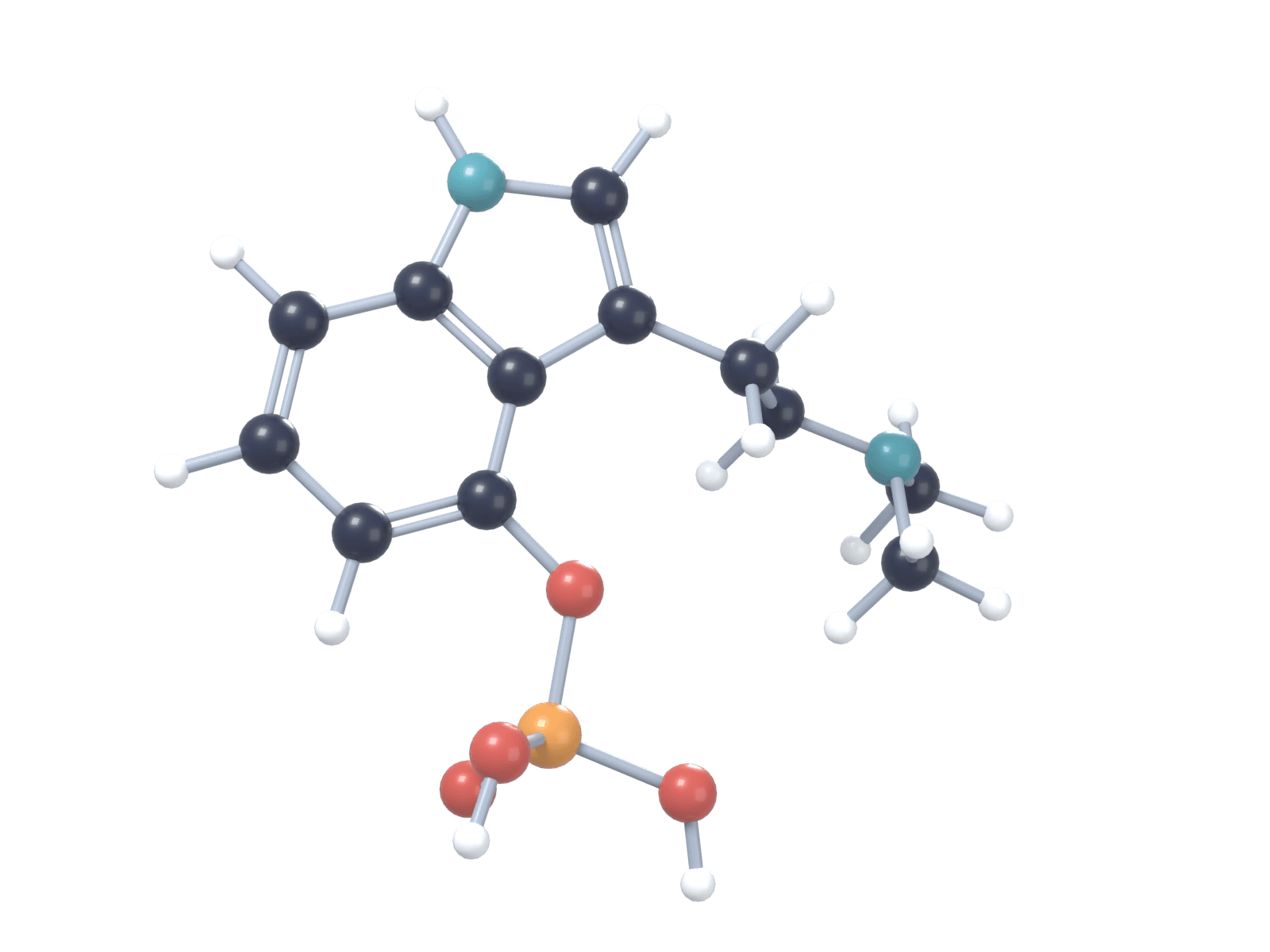
Drag to rotate.
MDMA
- Phase 3 completed; not approved (FDA, 2024)
MDMA is an entactogen that mainly releases serotonin and is linked to greater emotional openness [7]. MDMA-assisted therapy pairs a few long drug sessions with a programme of psychotherapy [8]. MDMA for PTSD reached phase 3 trials, published in 2021 and 2023, with better results than placebo [8] [9]. In 2024 the FDA declined approval and asked for a new trial [10]. No medicine containing MDMA is authorised in the European Union [11].
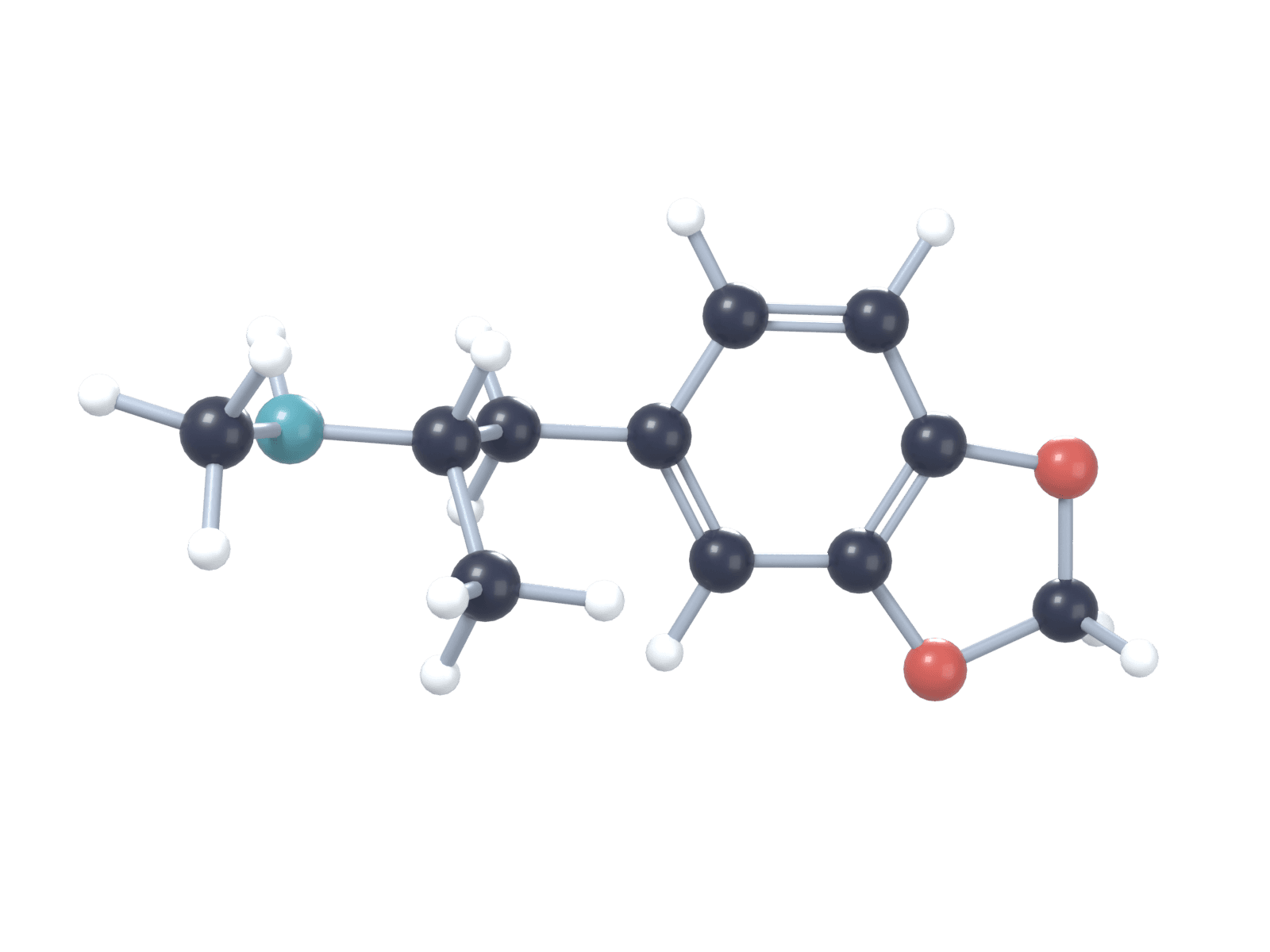
Drag to rotate.
LSD
- Phase 3 (sponsor data)
LSD is a synthetic classic psychedelic of the ergoline family that acts mainly as a partial agonist at the 5-HT2A receptor [12]. Its effects take up much of a day [13]. The history of LSD in psychiatry spans two decades of studies, halted around 1970, and a return to clinical trials in Switzerland in 2014 [14] [15]. In 2025, a phase 2b trial of LSD-assisted therapy in generalised anxiety found improvement over placebo after a single dose [16]. In 2026 the sponsor reported phase 3 results that are not yet published, and LSD remains unauthorised as a medicine in the European Union [17] [18].
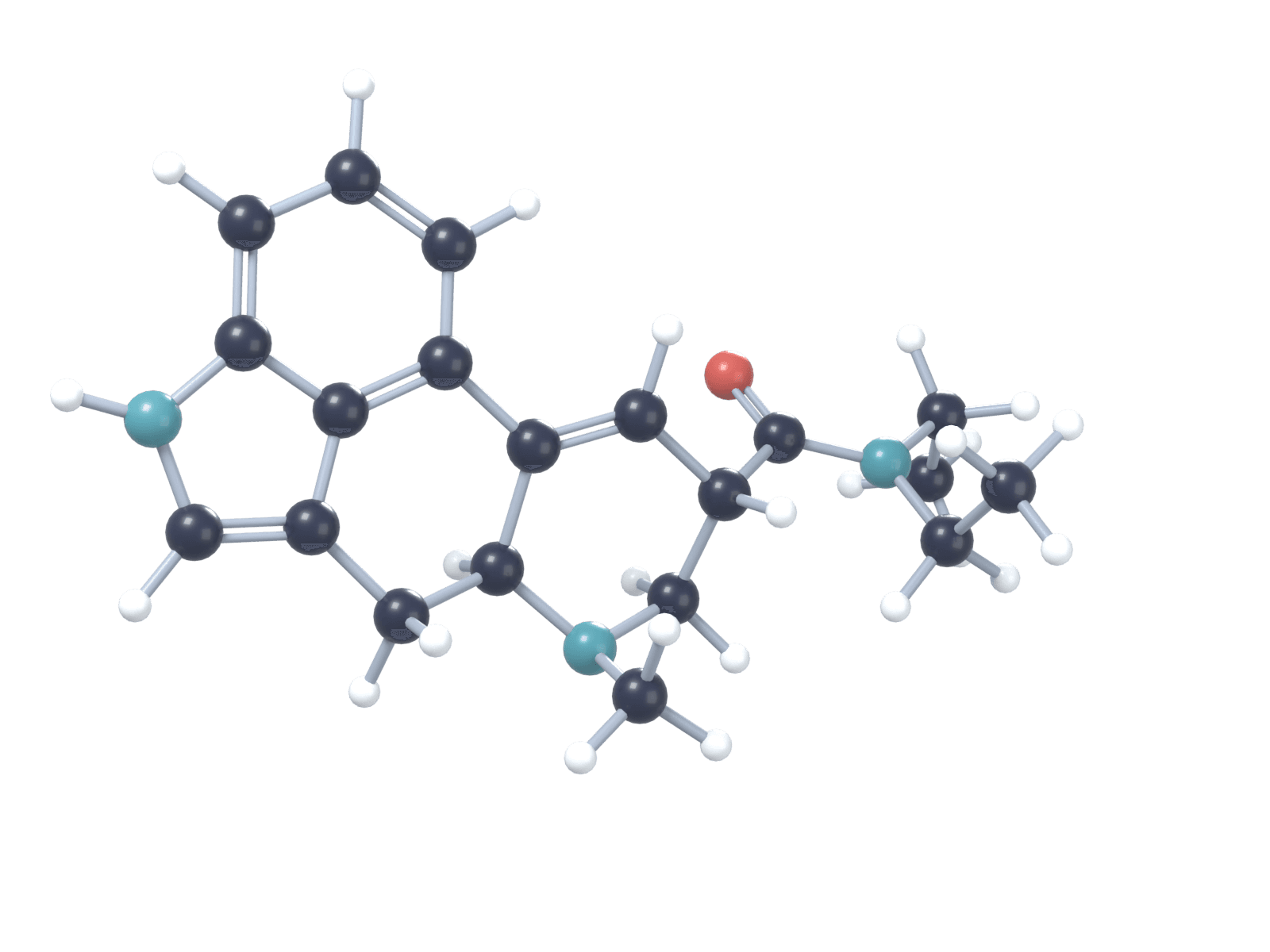
Drag to rotate.
DMT and ayahuasca
- Phase 2
DMT is a classic psychedelic; ayahuasca is an Amazonian brew containing DMT plus alkaloids that inhibit MAO-A. The key point in DMT vs ayahuasca is route and duration: injected DMT acts for minutes, drunk ayahuasca for about four hours [19]. Both act mainly on the 5-HT2A receptor [1]. Depression is the most studied area, with a controlled ayahuasca trial in Brazil in 2019 [19] and an intravenous DMT trial in the UK in 2026 [20]. Neither is authorised as a medicine.
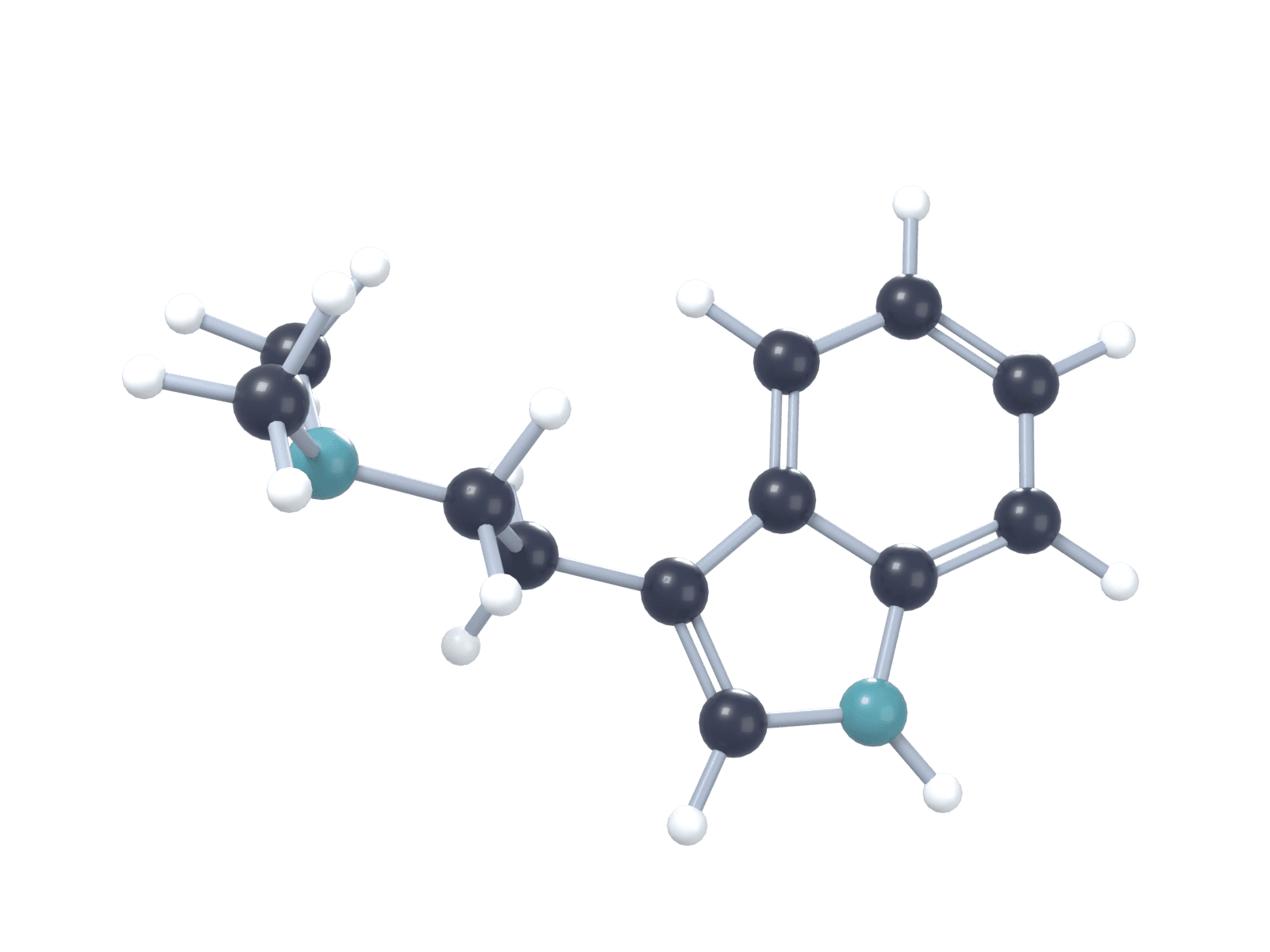
Drag to rotate.
Dissociative anaesthetics: ketamine and esketamine
- Specific formulation authorised in the EU
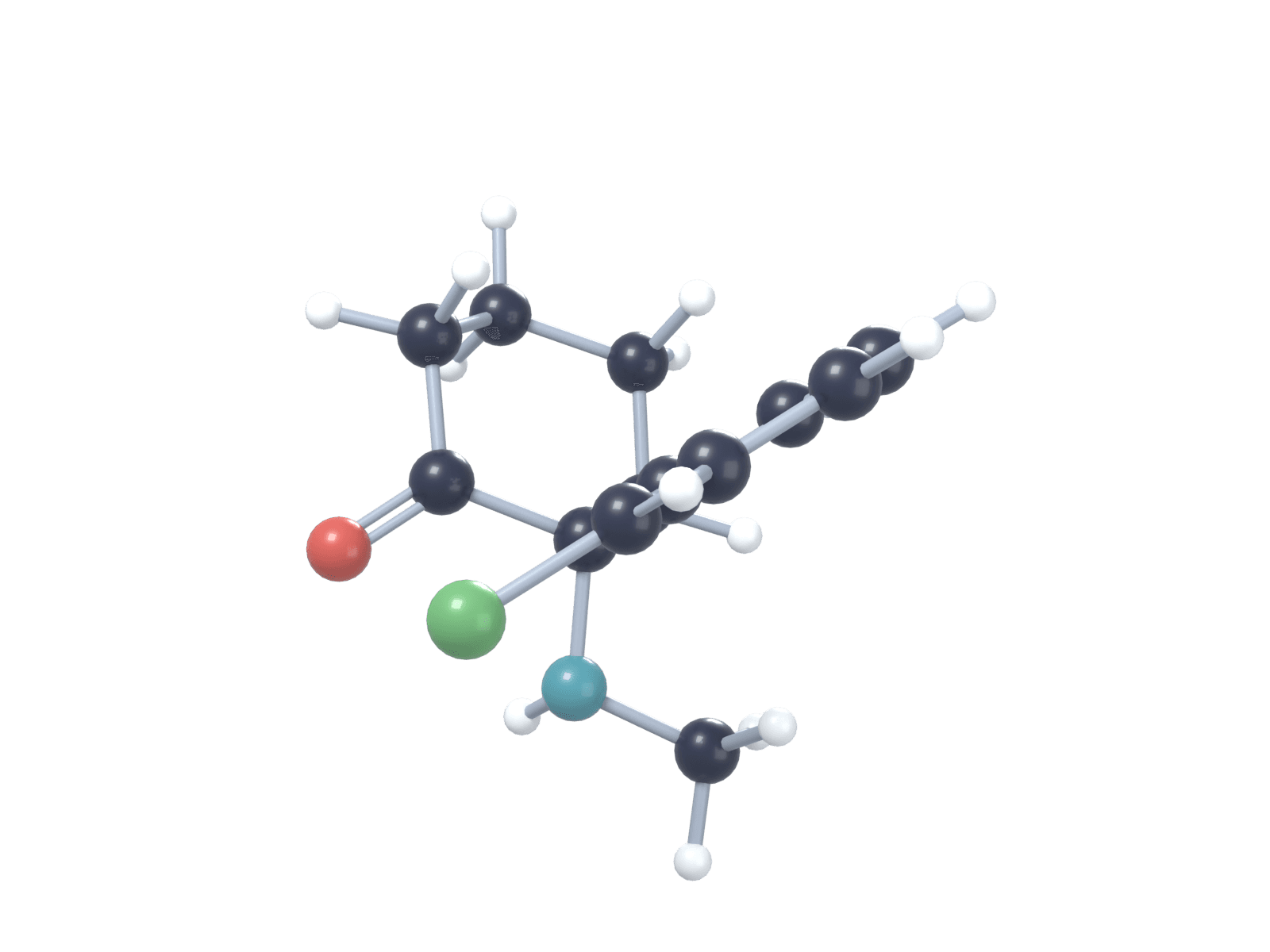
Ketamine is a dissociative anaesthetic in clinical use since 1970, and esketamine is its isolated S form. Unlike classic psychedelics, it acts mainly by blocking the NMDA glutamate receptor [21]. With esketamine, dissociative symptoms typically resolve by about an hour and a half after a dose [22]. In treatment-resistant depression, a small controlled trial reported improvement within hours in 2000 [23], and in 2023 ketamine was non-inferior to electroconvulsive therapy in a randomised trial [24]. Esketamine nasal spray has been authorised in the European Union since 2019 for treatment-resistant depression, with an antidepressant and under supervision [22].
Drag to rotate.
These sections are educational and bring together research, safety and regulatory status. They are not treatment recommendations: each person’s clinical plan is defined in the assessment consultation. Open the references below to see the sources behind the clinical and scientific statements.
References
24
- Nichols DE. Psychedelics. Pharmacol Rev. 2016;68(2):264–355. doi:10.1124/pr.115.011478 (opens in a new tab)Review
- Carhart-Harris RL, Bolstridge M, Rucker J, et al. Psilocybin with psychological support for treatment-resistant depression: an open-label feasibility study. Lancet Psychiatry. 2016;3(7):619–627. doi:10.1016/S2215-0366(16)30065-7 (opens in a new tab)Clinical trial
- Jacobs E, Zahid Z, Hinkle J, et al. Psychedelic medicine: mechanisms, evidence, and translation to practice. BMJ. 2026;392:e081723. doi:10.1136/bmj-2024-081723 (opens in a new tab)Review
- Goodwin GM, Aaronson ST, Alvarez O, et al. Single-dose psilocybin for a treatment-resistant episode of major depression. N Engl J Med. 2022;387:1637–1648. doi:10.1056/NEJMoa2206443 (opens in a new tab)Clinical trial
- Compass Pathways. Company announcement, 23 June 2025: first phase 3 trial (COMP005, n = 258) of COMP360 psilocybin in treatment-resistant depression met its primary endpoint (MADRS difference versus placebo at week 6: −3.6). Topline data, not peer reviewed. ir.compasspathways.com (opens in a new tab)Sponsor announcement, not peer reviewed
- Compass Pathways. Company announcement, 17 February 2026: second phase 3 trial (COMP006, n = 581) met its primary endpoint (25 mg versus 1 mg, MADRS difference at week 6: −3.8). Topline data, not peer reviewed. ir.compasspathways.com (opens in a new tab)Sponsor announcement, not peer reviewed
- Sessa B, Higbed L, Nutt D. A review of 3,4-methylenedioxymethamphetamine (MDMA)-assisted psychotherapy. Front Psychiatry. 2019;10:138. doi:10.3389/fpsyt.2019.00138 (opens in a new tab)Review
- Mitchell JM, Bogenschutz M, Lilienstein A, et al. MDMA-assisted therapy for severe PTSD: a randomized, double-blind, placebo-controlled phase 3 study. Nat Med. 2021;27:1025–1033. doi:10.1038/s41591-021-01336-3 (opens in a new tab)Clinical trial
- Mitchell JM, Ot’alora G M, van der Kolk B, et al. MDMA-assisted therapy for moderate to severe PTSD: a randomized, placebo-controlled phase 3 trial. Nat Med. 2023;29:2473–2480. doi:10.1038/s41591-023-02565-4 (opens in a new tab)Clinical trial
- U.S. Food and Drug Administration, Center for Drug Evaluation and Research. Complete Response Letter, NDA 215455 (midomafetamine capsules), dated 8 August 2024; made public by the FDA in 2025 (openFDA complete response letter database). open.fda.gov (opens in a new tab)Regulatory source
- European Medicines Agency. Medicines data (centrally authorised and assessed human medicines), report of 9 October 2026: no medicine containing MDMA (midomafetamine) is listed. ema.europa.eu (opens in a new tab)Regulatory source
- Passie T, Halpern JH, Stichtenoth DO, Emrich HM, Hintzen A. The pharmacology of lysergic acid diethylamide: a review. CNS Neurosci Ther. 2008;14(4):295–314. doi:10.1111/j.1755-5949.2008.00059.x (opens in a new tab)Review
- Holze F, Vizeli P, Ley L, et al. Acute dose-dependent effects of lysergic acid diethylamide in a double-blind placebo-controlled study in healthy subjects. Neuropsychopharmacology. 2021;46(3):537–544. doi:10.1038/s41386-020-00883-6 (opens in a new tab)Clinical trial
- Nichols DE. Dark classics in chemical neuroscience: lysergic acid diethylamide (LSD). ACS Chem Neurosci. 2018;9(10):2331–2343. doi:10.1021/acschemneuro.8b00043 (opens in a new tab)Review
- Gasser P, Holstein D, Michel Y, et al. Safety and efficacy of lysergic acid diethylamide-assisted psychotherapy for anxiety associated with life-threatening diseases. J Nerv Ment Dis. 2014;202(7):513–520. doi:10.1097/NMD.0000000000000113 (opens in a new tab)Clinical trial
- Robison R, Barrow R, Conant C, et al. Single treatment with MM120 (lysergide) in generalized anxiety disorder: a randomized clinical trial. JAMA. 2025;334(15):1358–1372. doi:10.1001/jama.2025.13481 (opens in a new tab)Clinical trial
- Definium Therapeutics. Topline results of the phase 3 Panorama study of DT120 in generalised anxiety disorder, 14 September 2026: placebo-adjusted HAM-A change of 5.1 points at week 12; the company also reported a positive phase 3 study (Emerge) in major depressive disorder in June 2026 (SEC Form 8-K, exhibit 99.1). Not peer reviewed. sec.gov (opens in a new tab)Sponsor announcement, not peer reviewed
- European Medicines Agency. Medicines data: list of medicines evaluated by the EMA (download consulted on 9 October 2026); no entry contains lysergide or LSD. ema.europa.eu (opens in a new tab)Regulatory source
- Palhano-Fontes F, Barreto D, Onias H, et al. Rapid antidepressant effects of the psychedelic ayahuasca in treatment-resistant depression: a randomized placebo-controlled trial. Psychol Med. 2019;49(4):655–663. doi:10.1017/S0033291718001356 (opens in a new tab)Clinical trial
- Erritzoe D, Barba T, Benway T, et al. A short-acting psychedelic intervention for major depressive disorder: a phase IIa randomized placebo-controlled trial. Nat Med. 2026;32:591–598. doi:10.1038/s41591-025-04154-z (opens in a new tab)Clinical trial
- Zanos P, Moaddel R, Morris PJ, et al. Ketamine and ketamine metabolite pharmacology: insights into therapeutic mechanisms. Pharmacol Rev. 2018;70(3):621–660. doi:10.1124/pr.117.015198 (opens in a new tab)Review
- European Medicines Agency. European public assessment report (EPAR) and product information for esketamine nasal spray; marketing authorisation in the EU since 18 December 2019. ema.europa.eu (opens in a new tab)Regulatory source
- Berman RM, Cappiello A, Anand A, et al. Antidepressant effects of ketamine in depressed patients. Biol Psychiatry. 2000;47(4):351–354. doi:10.1016/S0006-3223(99)00230-9 (opens in a new tab)Clinical trial
- Anand A, Mathew SJ, Sanacora G, et al. Ketamine versus ECT for nonpsychotic treatment-resistant major depression. N Engl J Med. 2023;388(25):2315–2325. doi:10.1056/NEJMoa2302399 (opens in a new tab)Clinical trial
Frequently asked questions
Are these substances approved as medicines in Portugal?
Psilocybin, MDMA, LSD and DMT are not authorised as medicines in the European Union. In Portugal, they are only used in authorised research. For psilocybin, exceptional pathways exist in other EU countries (for example, in Czechia since 2026). In the dissociative anaesthetic family, one specific nasal formulation is authorised in the European Union for an indication in treatment-resistant depression, under the supervision of healthcare professionals. KETAMED uses only medicines authorised in Portugal, after individual assessment.
Does this page tell me which treatment I will have?
No. The page is educational. The plan and any medicine are decided individually, in the assessment consultation, within the Portuguese legal framework.
What does “phase 3” mean in a clinical trial?
It is the stage in which a treatment is compared in larger groups of participants, before any application for authorisation. Positive phase 3 results are not the same as approval.
Content reviewed by the KETAMED® clinical team, under medical direction, on .
The first step is an assessment consultation.
We answer your questions and assess with you whether this approach is suitable. Send a request and we will contact you to arrange it.
Request an assessment consultation
If you prefer, contact us: +351 966 155 581 or info@ketamed.pt