

LSD
LSD (lysergic acid diethylamide) is a synthetic psychedelic that, in tiny amounts, profoundly alters perception, thinking and emotion for many hours [1]. It acts mainly at the serotonin 5-HT2A receptor, and LSD-assisted therapy is once again being studied in clinical trials, chiefly in anxiety. It is not an authorised medicine in the European Union or in Portugal.
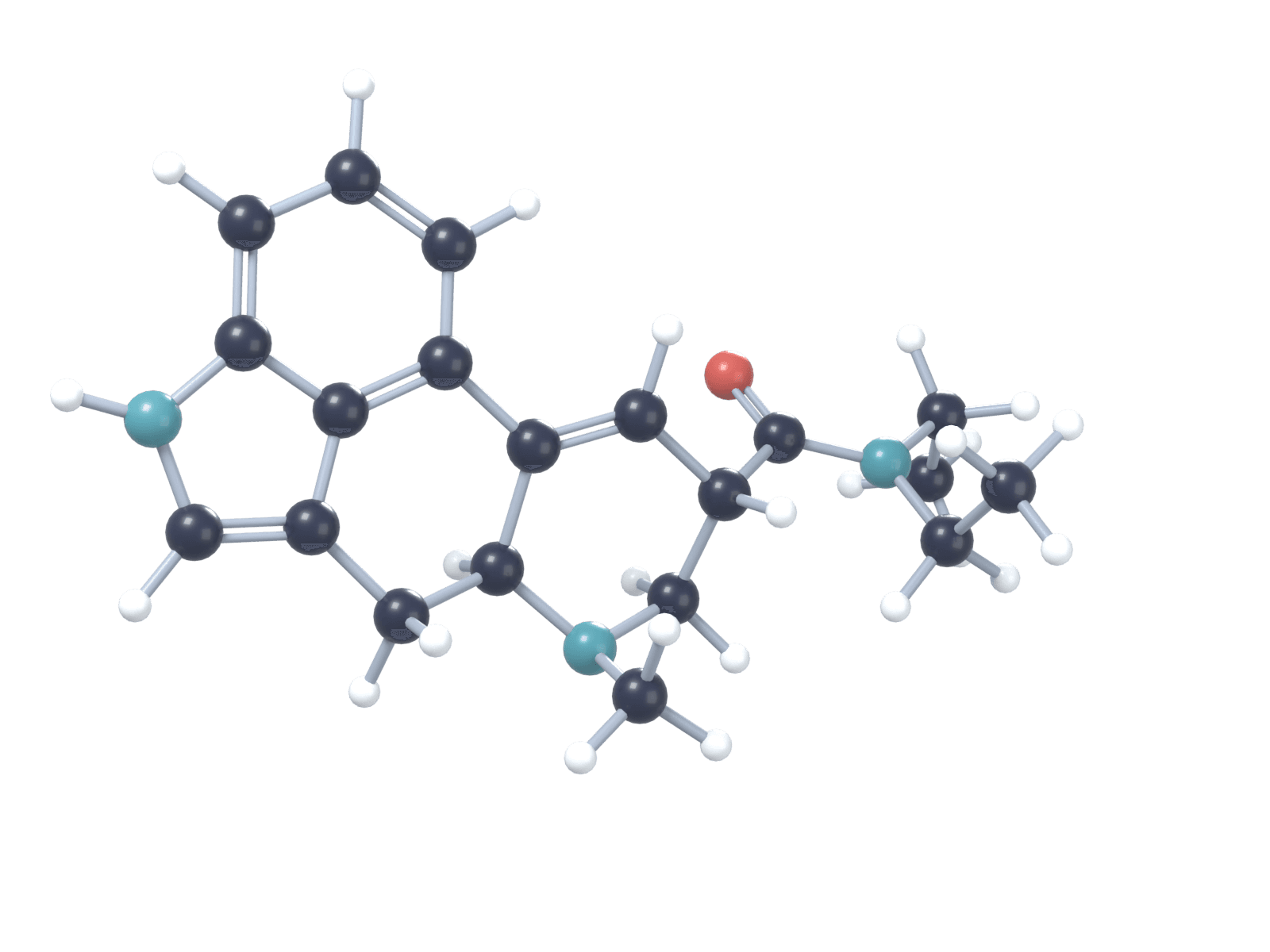
Drag to rotate.
What is LSD-assisted therapy?
LSD-assisted therapy is an investigational treatment model: one or a few doses, given in a controlled clinical setting, with support before, during and after the session [2] [3]. It is not a daily medication.
The format varies. In some studies the experience is worked through afterwards in psychotherapy appointments [2]; in others psychotherapy is excluded and participants are simply monitored [4].
Results from one model therefore do not automatically carry over to the other.
What is the history of LSD?
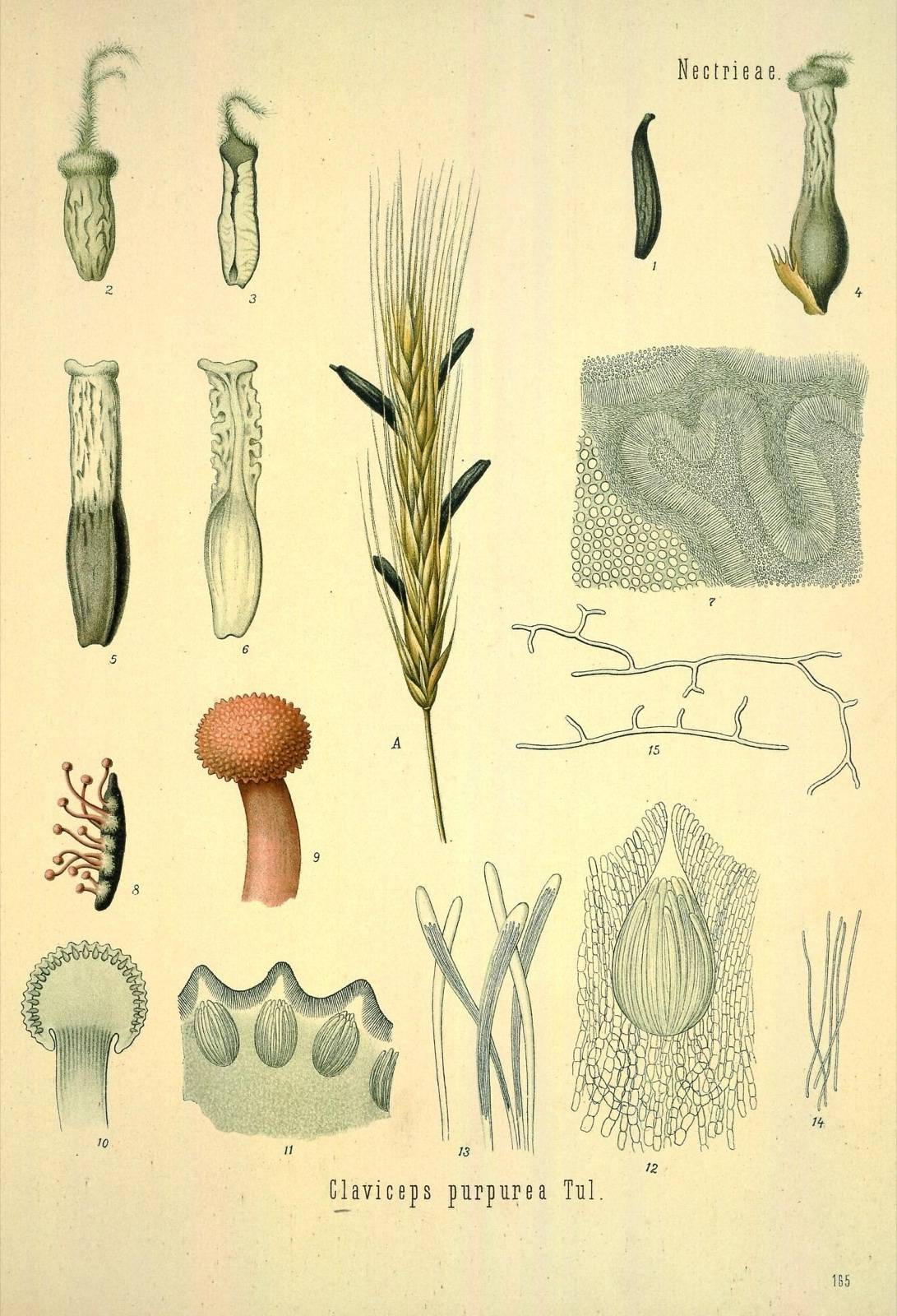
Ergot of rye, Köhler's Medizinal-Pflanzen, 1890
The history of LSD in medicine starts in a Swiss laboratory, runs through two decades of psychiatric research and then a long pause. Clinical trials only resumed in the twenty-first century.
- 1938. Albert Hofmann first makes LSD at Sandoz [5].
- 1943. Hofmann discovers its psychological effects by accident [1].
- 1947. Its resemblance to symptoms of schizophrenia leads to its use as a “model psychosis” [6].
- 1949–1966. Sandoz supplies it to psychiatrists and researchers as an aid to psychotherapy [6].
- 1950s and 1960s. Extensive research into anxiety in terminal cancer, alcohol and opioid dependence, and depression [5] [6].
- 1968–1971. As recreational use spreads, prohibition follows in the United States and under the 1971 United Nations Convention; clinical research stops [7] [1] [8].
- 2014. Research returns in Switzerland with the first controlled trial of LSD-assisted psychotherapy in more than four decades [2].
- 2023–2026. New phase 2 trials in Switzerland and the United States and, in 2026, phase 3 results reported by the sponsor [3] [4] [9].
How does LSD work?
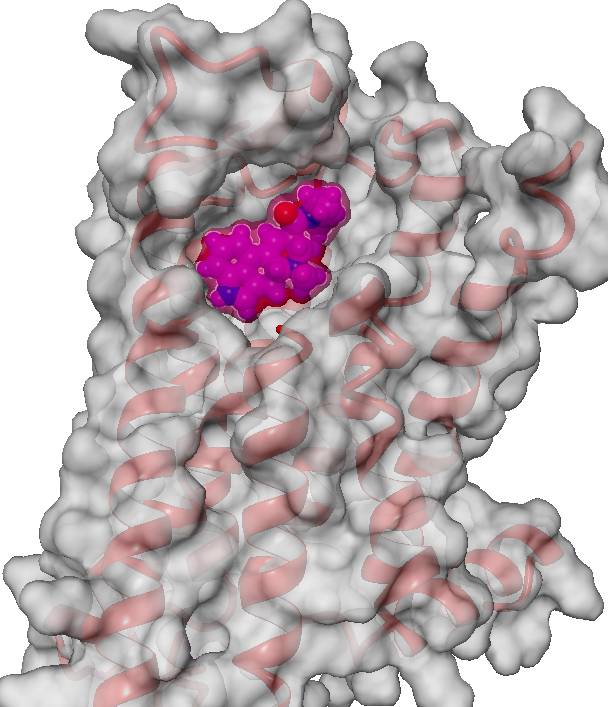
LSD bound to the serotonin 5-HT2A receptor (crystal structure)
LSD binds to several serotonin and dopamine receptors, but its main target is the 5-HT2A receptor, where it acts as a partial agonist [5] [6]. That receptor appears essential: in healthy volunteers, blocking it beforehand prevented both the subjective effects and the changes in brain connectivity [10] [11].
Its long action may have a structural explanation: LSD comes off the receptor very slowly, and the receptor seems to close over the molecule like a “lid” [12]. People with genetically low activity of the liver enzyme CYP2D6 have longer-lasting effects [13].
While the drug is acting, brain imaging shows looser networks and more crosstalk between networks that usually work apart [14]. Whether this explains any clinical benefit is still a hypothesis.
What happens in a research protocol?
In trials, LSD is given in only a few sessions, usually one or two, always with professional support [3] [4]. Each session takes a full day and follows similar steps.
- Preparation: a medical and psychiatric assessment and preparatory sessions to build trust; some psychiatric medicines are tapered off beforehand [2] [15].
- The session: a safe physical setting, with at least two professionals present throughout [15] [4].
- Monitoring: blood pressure and heart rate are checked, adverse events are recorded and driving is not allowed afterwards [2].
- Integration: drug-free appointments to review and integrate the experience, in protocols that include psychotherapy [2].
Which conditions is it being researched in?
LSD has been researched mainly in anxiety, in controlled trials in Switzerland and the United States. Alcohol dependence was studied in older trials, and sponsor phase 3 data are still unpublished.
| Condition | Where it has been studied | Evidence | Phase |
|---|---|---|---|
| Generalised anxiety disorder | United States [4]; sponsor studies [16] [9] | Phase 3 sponsor data, unpublished | Phase 3 |
| Anxiety, with or without serious illness | Switzerland [2] [3] | Controlled trials, still limited | Phase 2 |
| Major depressive disorder | Sponsor study [9] | Phase 3 sponsor data, unpublished | Phase 3 |
| Alcohol dependence | A 2012 review of older trials [17] | Older trials, with limitations | Historical |
In generalised anxiety, a phase 2b trial found that a single dose reduced anxiety more than placebo, while the lower doses did not differ from placebo [4]. In the Swiss trials, the improvement lasted for months [2] [3].
The sponsor has reported its phase 3 studies as positive, but the data have not yet been published in peer-reviewed form [16] [9]. The US Food and Drug Administration (FDA) has granted Breakthrough Therapy designation, which speeds development but is not an approval [9] [18].
In alcohol dependence, the older trials linked a single dose to less problem drinking, but they have methodological weaknesses [17] [2].
What are the risks?
Visual changes and nausea are common while the drug is acting, and blood pressure and heart rate rise moderately [4] [10]. The most important risks are psychological.
- Overwhelming distress during the session, the most likely risk, which can lead to dangerous behaviour [15].
- Prolonged psychosis, which is less common [15].
- Persistent perceptual changes, in which visual effects return after the session; these are uncommon and reported mostly after illicit use [19].
- Interactions: a selective serotonin reuptake inhibitor antidepressant raised LSD concentrations [20]; low-quality reports link psychedelics taken with lithium to seizures [21].
Contraindications. Trials exclude people with a personal or family history of psychosis or other severe psychiatric illness, bipolar I disorder, current alcohol or drug dependence, pregnancy and breastfeeding [15] [2].
Outside a supervised medical setting, complications arise more easily [5].
What is its legal status?
LSD is a controlled substance internationally and in Portugal. No LSD medicine is approved in the European Union, Portugal or the United States.
- European Union: no LSD medicine has been evaluated by the European Medicines Agency [22]; internationally, it is in Schedule I of the 1971 Convention [8].
- Portugal: lysergide (LSD) is listed in Schedule II-A of Decree-Law 15/93 [23] [24]; decriminalising personal use did not make it legal [25].
- Switzerland: the Federal Office of Public Health can authorise limited medical use of LSD case by case, at the physician’s request and with the patient’s written consent [26] [27].
- United States: it remains in Schedule I [28]; the sponsor expects to apply to the FDA for approval in 2027 [9].
What is still being researched
Research on LSD is moving forward on several fronts. The next steps should clarify who benefits, for how long and under what conditions.
- Confirming phase 3: peer-reviewed publication and regulatory assessment of the reported results [9].
- The role of expectation: trial designs in which LSD’s obvious effects do not reveal group allocation [4] [29].
- How long benefit lasts: longer follow-up in larger groups [3] [2].
- What psychotherapy adds: comparing protocols with and without psychotherapeutic support [2] [4].
- Interactions: combination with other psychiatric medicines [20].
- Mechanism: how brain changes during the drug’s action relate to clinical benefit.
Content reviewed by the KETAMED® clinical team, under medical direction, on .
References
29
- Nichols DE. Dark classics in chemical neuroscience: lysergic acid diethylamide (LSD). ACS Chem Neurosci. 2018;9(10):2331–2343. doi:10.1021/acschemneuro.8b00043 (opens in a new tab)Review
- Gasser P, Holstein D, Michel Y, et al. Safety and efficacy of lysergic acid diethylamide-assisted psychotherapy for anxiety associated with life-threatening diseases. J Nerv Ment Dis. 2014;202(7):513–520. doi:10.1097/NMD.0000000000000113 (opens in a new tab)Clinical trial
- Holze F, Gasser P, Müller F, Dolder PC, Liechti ME. Lysergic acid diethylamide-assisted therapy in patients with anxiety with and without a life-threatening illness: a randomized, double-blind, placebo-controlled phase II study. Biol Psychiatry. 2023;93(3):215–223. doi:10.1016/j.biopsych.2022.08.025 (opens in a new tab)Clinical trial
- Robison R, Barrow R, Conant C, et al. Single treatment with MM120 (lysergide) in generalized anxiety disorder: a randomized clinical trial. JAMA. 2025;334(15):1358–1372. doi:10.1001/jama.2025.13481 (opens in a new tab)Clinical trial
- Passie T, Halpern JH, Stichtenoth DO, Emrich HM, Hintzen A. The pharmacology of lysergic acid diethylamide: a review. CNS Neurosci Ther. 2008;14(4):295–314. doi:10.1111/j.1755-5949.2008.00059.x (opens in a new tab)Review
- Liechti ME. Modern clinical research on LSD. Neuropsychopharmacology. 2017;42(11):2114–2127. doi:10.1038/npp.2017.86 (opens in a new tab)Review
- Lyndon B. Johnson. Statement by the President upon signing bill relating to traffic in or possession of drugs such as LSD, 25 October 1968 (Public Law 90-639): it increased the penalties for the sale or manufacture of LSD and imposed, for the first time, a penalty for its possession. The American Presidency Project. presidency.ucsb.edu (opens in a new tab)Legislation
- United Nations. Schedules of the Convention on Psychotropic Substances of 1971, as at 3 December 2024 (ST/CND/1/Add.2/Rev.10). Schedule I includes (+)-lysergide (LSD, LSD-25). documents.un.org (PDF) (opens in a new tab)Legislation
- Definium Therapeutics. Topline results of the phase 3 Panorama study of DT120 in generalised anxiety disorder, 14 September 2026: placebo-adjusted HAM-A change of 5.1 points at week 12; the company also reported a positive phase 3 study (Emerge) in major depressive disorder in June 2026 (SEC Form 8-K, exhibit 99.1). Not peer reviewed. sec.gov (opens in a new tab)Sponsor announcement, not peer reviewed
- Holze F, Vizeli P, Ley L, et al. Acute dose-dependent effects of lysergic acid diethylamide in a double-blind placebo-controlled study in healthy subjects. Neuropsychopharmacology. 2021;46(3):537–544. doi:10.1038/s41386-020-00883-6 (opens in a new tab)Clinical trial
- Preller KH, Burt JB, Ji JL, et al. Changes in global and thalamic brain connectivity in LSD-induced altered states of consciousness are attributable to the 5-HT2A receptor. eLife. 2018;7:e35082. doi:10.7554/eLife.35082 (opens in a new tab)Study
- Wacker D, Wang S, McCorvy JD, et al. Crystal structure of an LSD-bound human serotonin receptor. Cell. 2017;168(3):377–389.e12. doi:10.1016/j.cell.2016.12.033 (opens in a new tab)Study
- Vizeli P, Straumann I, Holze F, et al. Genetic influence of CYP2D6 on pharmacokinetics and acute subjective effects of LSD in a pooled analysis. Sci Rep. 2021;11(1):10851. doi:10.1038/s41598-021-90343-y (opens in a new tab)Study
- Carhart-Harris RL, Muthukumaraswamy S, Roseman L, et al. Neural correlates of the LSD experience revealed by multimodal neuroimaging. Proc Natl Acad Sci USA. 2016;113(17):4853–4858. doi:10.1073/pnas.1518377113 (opens in a new tab)Study
- Johnson MW, Richards WA, Griffiths RR. Human hallucinogen research: guidelines for safety. J Psychopharmacol. 2008;22(6):603–620. doi:10.1177/0269881108093587 (opens in a new tab)Guidance
- Definium Therapeutics (formerly MindMed). Topline results of the phase 3 Voyage study of DT120 (lysergide) in generalised anxiety disorder, 12 August 2026: placebo-adjusted HAM-A change of 5.4 points at week 12 (SEC Form 8-K, exhibit 99.1). Not peer reviewed. sec.gov (opens in a new tab)Sponsor announcement, not peer reviewed
- Krebs TS, Johansen PØ. Lysergic acid diethylamide (LSD) for alcoholism: meta-analysis of randomized controlled trials. J Psychopharmacol. 2012;26(7):994–1002. doi:10.1177/0269881112439253 (opens in a new tab)Review
- U.S. Food and Drug Administration. Breakthrough Therapy designation: definition and criteria (designation applies to a specific investigational product for a specific indication). fda.gov (opens in a new tab)Regulatory source
- Halpern JH, Pope HG Jr. Hallucinogen persisting perception disorder: what do we know after 50 years? Drug Alcohol Depend. 2003;69(2):109–119. doi:10.1016/s0376-8716(02)00306-x (opens in a new tab)Review
- Becker AM, Humbert-Droz M, Mueller L, et al. Acute effects and pharmacokinetics of LSD after paroxetine or placebo pre-administration in a randomized, double-blind, cross-over phase I trial. Clin Pharmacol Ther. 2025;117(6):1784–1792. doi:10.1002/cpt.3618 (opens in a new tab)Clinical trial
- Nayak SM, Gukasyan N, Barrett FS, et al. Classic psychedelic coadministration with lithium, but not lamotrigine, is associated with seizures: an analysis of online psychedelic experience reports. Pharmacopsychiatry. 2021;54(5):240–245. doi:10.1055/a-1524-2794 (opens in a new tab)Study
- European Medicines Agency. Medicines data: list of medicines evaluated by the EMA (download consulted on 9 October 2026); no entry contains lysergide or LSD. ema.europa.eu (opens in a new tab)Regulatory source
- Decreto-Lei n.º 15/93, de 22 de Janeiro: regime jurídico do tráfico e consumo de estupefacientes e substâncias psicotrópicas (tabelas anexas), na redacção actual, incluindo as alterações da Lei n.º 23/2025. (Decree-Law 15/93 of 22 January: Portugal’s legal regime on trafficking and use of narcotic and psychotropic substances (annexed schedules), as currently amended, including by Law 23/2025.) diariodarepublica.pt (versão consolidada) (opens in a new tab)Legislation
- Lei n.º 13/2012, de 26 de Março: décima nona alteração ao Decreto-Lei n.º 15/93, com republicação das tabelas anexas; a tabela II-A inclui «Lisergida, LSD, LSD-25» (compilação INFARMED). (Law 13/2012 of 26 March: nineteenth amendment to Decree-Law 15/93, republishing the annexed schedules; Schedule II-A lists lysergide (LSD, LSD-25) (INFARMED compilation).) infarmed.pt (PDF) (opens in a new tab)Legislation
- Lei n.º 30/2000, de 29 de Novembro: regime jurídico aplicável ao consumo de estupefacientes (descriminalização do consumo; não legaliza as substâncias). (Law 30/2000 of 29 November: the legal regime for drug use in Portugal (decriminalises personal use; does not legalise the substances).) diariodarepublica.pt (PDF) (opens in a new tab)Legislation
- Swiss Federal Office of Public Health (FOPH/BAG). Exceptional authorisations for prohibited narcotics (Ausnahmebewilligungen für verbotene Betäubungsmittel): under Article 8(5) of the Narcotics Act, the FOPH may authorise the limited medical use of prohibited narcotics such as LSD; only the treating physician may apply, with the patient’s written consent. bag.admin.ch (opens in a new tab)Regulatory source
- Liechti ME, Gasser P, Aicher HD, et al. Implementing psychedelic-assisted therapy: history and characteristics of the Swiss limited medical use program. Neurosci Appl. 2025;4:105525. doi:10.1016/j.nsa.2025.105525 (opens in a new tab)Study
- United States Code of Federal Regulations, 21 CFR 1308.11 (Schedule I of the Controlled Substances Act): lysergic acid diethylamide is listed among the hallucinogenic substances (DEA code 7315). law.cornell.edu (opens in a new tab)Legislation
- Muthukumaraswamy SD, Forsyth A, Lumley T. Blinding and expectancy confounds in psychedelic randomized controlled trials. Expert Rev Clin Pharmacol. 2021;14(9):1133–1152. doi:10.1080/17512433.2021.1933434 (opens in a new tab)Review