

Psilocybin
Psilocybin is a classic psychedelic of the tryptamine family, made naturally by a number of mushroom species. Once absorbed, it is converted to psilocin, which temporarily alters perception, emotion and thinking by stimulating serotonin receptors. It is being studied in clinical trials, mainly as psilocybin-assisted therapy for depression, and it is not authorised as a medicine in the European Union.
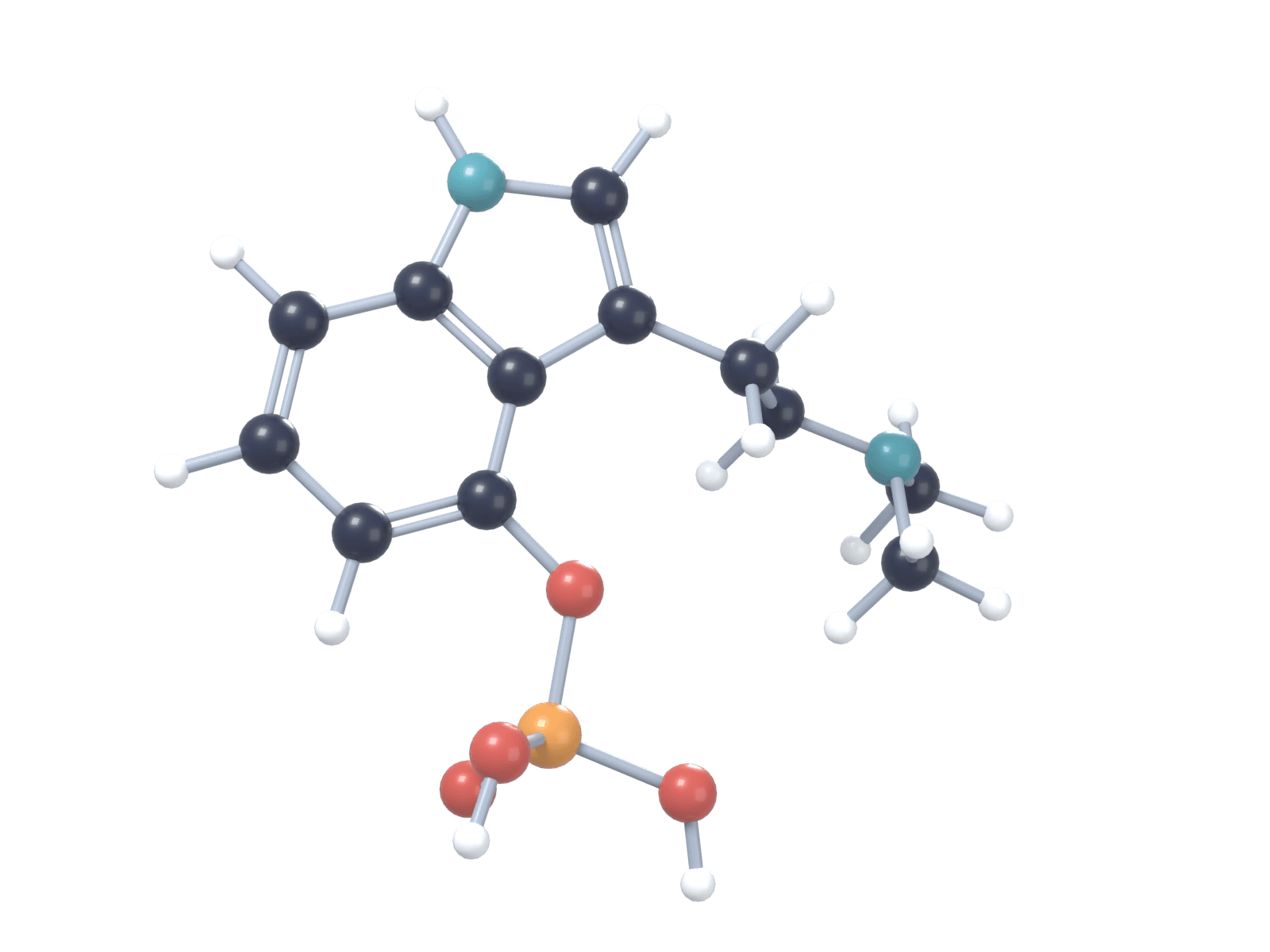
Drag to rotate.
What is psilocybin-assisted therapy?
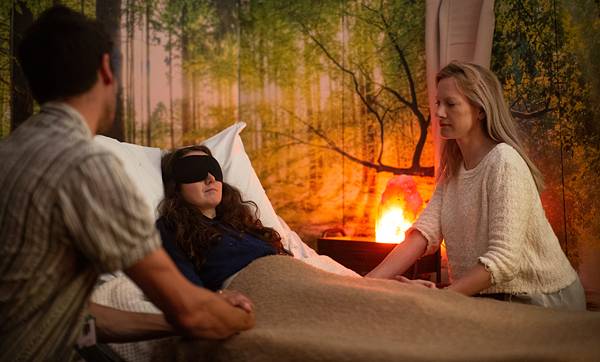
Re-enactment of an accompanied session in a psilocybin study (research setting)
Psilocybin-assisted therapy is an investigational treatment model that pairs one or a few doses of psilocybin with structured psychological support [1]. The dose is taken in a clinical setting, with professionals present for the whole duration of the effects.
Unlike daily antidepressants, trials test single administrations spaced weeks apart [2] [3]. Preparation and follow-up support are part of the protocol.
What is the history of psilocybin?

Codex Magliabechiano, 16th century: ritual mushroom consumption
Traditional use of psilocybin mushrooms goes back a long way. Its scientific history began in 1958 and paused for decades before resuming in the twenty-first century [4].
- Before European contact. In Mesoamerica, these mushrooms were used in religious and healing rituals; the Aztecs called them teonanacatl [5].
- 1958 and 1959. Albert Hofmann and colleagues isolated psilocybin from the mushroom Psilocybe mexicana, worked out its structure and synthesised it; psilocin was identified the following year [6] [7] [8].
- The 1960s and 1971. After a period of psychiatric research, controversy brought tightening restrictions [9]; the 1971 United Nations Convention placed psilocybin and psilocin in its Schedule I [10].
- 2006. At Johns Hopkins University, a study in healthy volunteers restarted research; participants rated the experience as having substantial personal meaning [11].
- 2016. At Johns Hopkins and New York University, controlled trials in people with cancer reported rapid and sustained reductions in anxiety and depression [12] [13]. At Imperial College London, an open-label study tested feasibility in treatment-resistant depression [14].
- 2018 and 2019. The US Food and Drug Administration (FDA) granted Breakthrough Therapy designation to programmes in depression; the designation is meant to speed up development and is not an approval [15] [16] [17].
- 2023. Australia began allowing authorised psychiatrists to prescribe psilocybin for treatment-resistant depression [18].
- 2025 and 2026. The sponsor of a synthetic formulation announced positive phase 3 results and began its marketing application to the FDA [19] [20] [21]; in Czechia, the law began to allow restricted medical use [22].
How does psilocybin work?
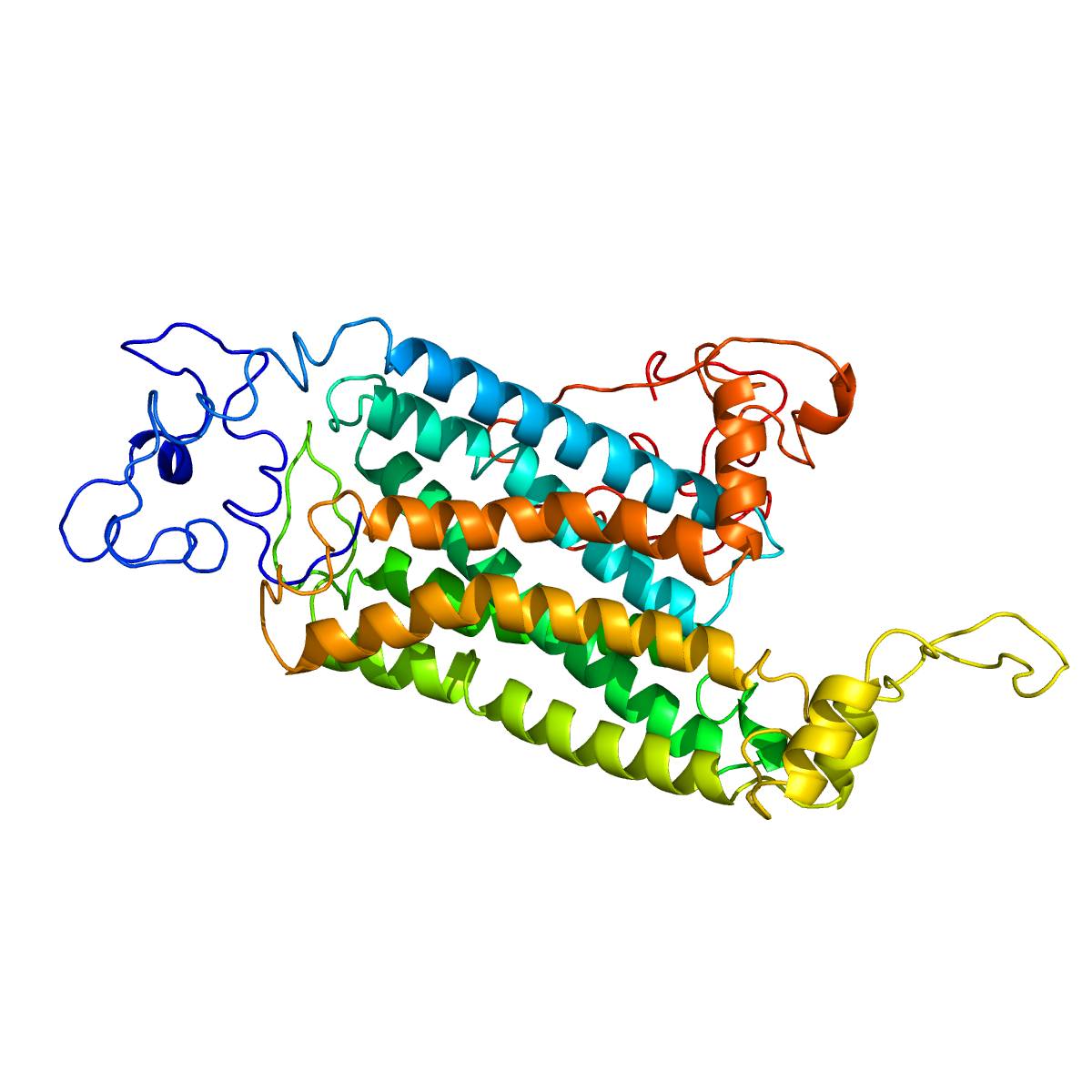
Serotonin 5-HT2A receptor (molecular structure model)
Once swallowed, psilocybin is converted to psilocin, the active molecule [23]. Psilocin mainly stimulates the serotonin 5-HT2A receptor, and the intensity of the experience tracks how many of these receptors are occupied [24] [25].
- Brain networks. During the effects, activity falls transiently in hub regions that link different brain networks [26].
- Plasticity. In cell cultures and animals, psychedelics promote new connections between neurons; in mice, these were still present a month after a single dose [27] [28]. In people, this remains a hypothesis.
- The lived experience. In the cancer trials, the intensity of the mystical-type experience statistically mediated the improvement [12] [13].
The precise mechanisms are not yet fully understood [1].
What does treatment look like in trials?
In trials, psilocybin is synthetic, given as capsules at a fixed dose, not as mushrooms [2] [29]. Treatment has three stages:
- Screening and preparation. A medical and psychiatric assessment, with an electrocardiogram and blood tests, and several hours of discussion to explain the effects and build trust with the team [9] [23].
- Session. This takes place in a quiet room, with at least two professionals present and blood pressure and pulse monitored [9]. Effects begin within an hour and fade to minimal levels after about six hours; the session usually lasts about eight [14] [11].
- Integration. Later meetings, without the drug, to make sense of the experience and connect it with everyday life.
The type of support varies between studies, from psychological support to structured psychotherapies such as motivational enhancement and cognitive behavioural therapy [1] [30].
Which conditions is it being researched in?
Depression is where psilocybin therapy has the strongest evidence, particularly treatment-resistant depression [1]. In other conditions, research is still at an early stage.
| Condition | Where it has been studied | Evidence | Phase |
|---|---|---|---|
| Treatment-resistant depression | North America and Europe, including Germany [2] [20] [31] | Phase 3 sponsor data, unpublished | Phase 3 |
| Major depressive disorder | United States and United Kingdom [29] [32] [3] | Controlled trials, still limited | Phase 2 |
| Cancer-related anxiety and depression | Johns Hopkins University and New York University [12] [13] | Controlled trials, still limited | Phase 2 |
| Alcohol use disorder | United States [30] | Controlled trial, still limited | Phase 2 |
| Tobacco dependence | Johns Hopkins University [33] [34] | Preliminary (pilot trial) | Exploratory |
| Obsessive-compulsive disorder | University of Arizona [35] [36] | Preliminary | Exploratory |
| Anorexia nervosa | University of California San Diego [37] | Preliminary, focused on safety | Phase 1 |
Treatment-resistant depression. In 2022, a single dose reduced symptoms at three weeks compared with a minimal control dose, but without a clearly sustained response at three months [2]. In 2025 and 2026, the sponsor announced favourable phase 3 results against comparators, not yet published in peer-reviewed form [19] [20]. A German phase 2b trial, published in 2026, missed its primary endpoint [31].
Major depressive disorder. In the United States, a single dose reduced symptoms more than an active placebo [29]; in the United Kingdom, it did not differ significantly from escitalopram on the primary outcome [3]. A 2024 meta-analysis found a benefit over comparators, larger in people who had used psychedelics before, so the role of expectations needs to be clarified [38].
Other areas. In alcohol use disorder, psilocybin reduced heavy drinking days compared with an active placebo [30]. The studies in smoking, obsessive-compulsive disorder and anorexia nervosa are there to inform larger trials, not to establish indications.
What are the risks and contraindications?
Under controlled conditions, the most common adverse effects are acute and short-lived: headache, nausea, dizziness and anxiety as the effects begin [2] [14]. Blood pressure and pulse rise moderately [9].
Some signals need attention. In a 2022 trial, suicidal ideation or self-injury occurred in every group [2], and in the 2026 German trial suicidal ideation on dosing days was more frequent with the higher dose [31]. Adverse effects are probably under-reported in these studies [39].
Trials usually exclude:
- a personal or family history of psychosis or another severe psychiatric disorder [9];
- a history of mania, active suicidal ideation with intent, or active substance use [29];
- raised blood pressure, assessed with physical examination and electrocardiogram [9];
- pregnancy [9].
Interactions. Several trials required psychiatric medicines to be tapered and stopped before the session [29] [31]. Escitalopram dampens some of the effects of psilocybin [40], and combining classic psychedelics with lithium has been linked to seizures [41] [42]. Any change to medication is a medical decision.
Unsupervised use. In a survey on difficult experiences with mushrooms, a minority reported physically risky situations or sought help for persisting symptoms; risk was linked to dose and lack of support [43]. In studies with screened and supported participants, such problems are extremely rare.
What is the legal status of psilocybin?
Psilocybin is not an authorised medicine in the European Union: the European Medicines Agency has not authorised any medicine containing it [44]. Psychedelics follow the same rules as all medicines and must show a positive benefit–risk balance [45].
In Portugal, psilocybin and psilocin are controlled substances, listed in the schedules of Decree-Law 15/93 [46]. There is no authorised medicine and no clinical access scheme.
Elsewhere, access routes exist and differ from one another:
- Australia. Since July 2023, psychiatrists authorised by the medicines regulator may prescribe psilocybin for treatment-resistant depression; the regulator has not evaluated any product for quality, safety and efficacy [18].
- Czechia. Since January 2026, the law has allowed restricted medical use in adults, as a compounded medicine prescribed by psychiatrists and given in healthcare facilities, mainly for severe depression where authorised medicines have failed. Availability in practice is not yet confirmed [22].
- United States. No psilocybin medicine has been approved by the FDA; the marketing application under way is not an approval [21]. Oregon runs a state psilocybin services programme that is not a medical treatment [47].
An authorisation in another country has no effect in Portugal.
What is still being researched
Research is now focused on questions that will shape the place of psilocybin in clinical practice. The main ones are:
- How long benefit lasts. How long improvement holds after a session, with longer follow-up [2].
- Blinding and expectations. How to design trials in which participants cannot easily tell which group they are in [48] [38].
- The role of psychotherapy. How much of the effect depends on psychological support, and which model of support suits best [1].
- Comparison with established treatments. Larger and longer trials against antidepressants [3].
- More diverse populations. Results in less selected patients, closer to everyday practice [1].
- Long-term safety. Detecting rare adverse effects as more people are treated [39].
Content reviewed by the KETAMED® clinical team, under medical direction, on .
References
48
- Jacobs E, Zahid Z, Hinkle J, et al. Psychedelic medicine: mechanisms, evidence, and translation to practice. BMJ. 2026;392:e081723. doi:10.1136/bmj-2024-081723 (opens in a new tab)Review
- Goodwin GM, Aaronson ST, Alvarez O, et al. Single-dose psilocybin for a treatment-resistant episode of major depression. N Engl J Med. 2022;387:1637–1648. doi:10.1056/NEJMoa2206443 (opens in a new tab)Clinical trial
- Carhart-Harris R, Giribaldi B, Watts R, et al. Trial of psilocybin versus escitalopram for depression. N Engl J Med. 2021;384:1402–1411. doi:10.1056/NEJMoa2032994 (opens in a new tab)Clinical trial
- Vollenweider FX, Preller KH. Psychedelic drugs: neurobiology and potential for treatment of psychiatric disorders. Nat Rev Neurosci. 2020;21:611–624. doi:10.1038/s41583-020-0367-2 (opens in a new tab)Review
- Nichols DE. Psilocybin: from ancient magic to modern medicine. J Antibiot (Tokyo). 2020;73(10):679–686. doi:10.1038/s41429-020-0311-8 (opens in a new tab)Review
- Hofmann A, Heim R, Brack A, Kobel H. Psilocybin, ein psychotroper Wirkstoff aus dem mexikanischen Rauschpilz Psilocybe mexicana Heim. Experientia. 1958;14(3):107–109. (Isolation of psilocybin from the Mexican mushroom Psilocybe mexicana (original in German).) doi:10.1007/BF02159243 (opens in a new tab)Study
- Hofmann A, Frey A, Ott H, Petrzilka T, Troxler F. Konstitutionsaufklärung und Synthese von Psilocybin. Experientia. 1958;14(11):397–399. (Elucidation of the structure and synthesis of psilocybin (original in German).) doi:10.1007/BF02160424 (opens in a new tab)Study
- Hofmann A, Troxler F. Identifizierung von Psilocin. Experientia. 1959;15(3):101–102. (Identification of psilocin (original in German).) doi:10.1007/BF02166696 (opens in a new tab)Study
- Johnson MW, Richards WA, Griffiths RR. Human hallucinogen research: guidelines for safety. J Psychopharmacol. 2008;22(6):603–620. doi:10.1177/0269881108093587 (opens in a new tab)Guidance
- United Nations. Schedules of the Convention on Psychotropic Substances of 1971, as at 3 December 2024 (ST/CND/1/Add.2/Rev.10). Schedule I lists psilocine and psilocybine. documents.un.org (PDF) (opens in a new tab)Legislation
- Griffiths RR, Richards WA, McCann U, Jesse R. Psilocybin can occasion mystical-type experiences having substantial and sustained personal meaning and spiritual significance. Psychopharmacology (Berl). 2006;187(3):268–283. doi:10.1007/s00213-006-0457-5 (opens in a new tab)Clinical trial
- Griffiths RR, Johnson MW, Carducci MA, et al. Psilocybin produces substantial and sustained decreases in depression and anxiety in patients with life-threatening cancer: a randomized double-blind trial. J Psychopharmacol. 2016;30(12):1181–1197. doi:10.1177/0269881116675513 (opens in a new tab)Clinical trial
- Ross S, Bossis A, Guss J, et al. Rapid and sustained symptom reduction following psilocybin treatment for anxiety and depression in patients with life-threatening cancer: a randomized controlled trial. J Psychopharmacol. 2016;30(12):1165–1180. doi:10.1177/0269881116675512 (opens in a new tab)Clinical trial
- Carhart-Harris RL, Bolstridge M, Rucker J, et al. Psilocybin with psychological support for treatment-resistant depression: an open-label feasibility study. Lancet Psychiatry. 2016;3(7):619–627. doi:10.1016/S2215-0366(16)30065-7 (opens in a new tab)Clinical trial
- COMPASS Pathways. Company announcement, 23 October 2018: FDA Breakthrough Therapy designation for its psilocybin therapy programme in treatment-resistant depression. A designation, not an approval; not peer reviewed. ir.compasspathways.com (opens in a new tab)Sponsor announcement, not peer reviewed
- Usona Institute. Announcement, 22 November 2019: FDA grants Breakthrough Therapy designation to Usona Institute’s psilocybin programme for major depressive disorder. A designation, not an approval; not peer reviewed. usonainstitute.org (opens in a new tab)Sponsor announcement, not peer reviewed
- U.S. Food and Drug Administration. Breakthrough Therapy designation: definition and criteria (designation applies to a specific investigational product for a specific indication). fda.gov (opens in a new tab)Regulatory source
- Therapeutic Goods Administration (Australia). Change to classification of psilocybin and MDMA to enable prescribing by authorised psychiatrists (effective 1 July 2023). tga.gov.au (opens in a new tab)Regulatory source
- Compass Pathways. Company announcement, 23 June 2025: first phase 3 trial (COMP005, n = 258) of COMP360 psilocybin in treatment-resistant depression met its primary endpoint (MADRS difference versus placebo at week 6: −3.6). Topline data, not peer reviewed. ir.compasspathways.com (opens in a new tab)Sponsor announcement, not peer reviewed
- Compass Pathways. Company announcement, 17 February 2026: second phase 3 trial (COMP006, n = 581) met its primary endpoint (25 mg versus 1 mg, MADRS difference at week 6: −3.8). Topline data, not peer reviewed. ir.compasspathways.com (opens in a new tab)Sponsor announcement, not peer reviewed
- Compass Pathways. Company announcement, 24 April 2026: the FDA granted the request for rolling submission and review of the New Drug Application (NDA) for COMP360 psilocybin in treatment-resistant depression. This is not an approval; in August 2026 the company reported that some NDA modules had been submitted, with completion expected in the fourth quarter of 2026. ir.compasspathways.com (opens in a new tab)Sponsor announcement, not peer reviewed
- Czech Republic. Act No. 270/2025 Coll. of 3 July 2025 (amending, among others, the Addictive Substances Act and the Medicines Act), in force since 1 January 2026, and Government Regulation No. 552/2025 Coll. of 10 December 2025 on the prescription, dispensing and use of individually prepared medicines containing psilocybin for medical use. e-sbirka.gov.cz (opens in a new tab)Legislation
- Brown RT, Nicholas CR, Cozzi NV, et al. Pharmacokinetics of escalating doses of oral psilocybin in healthy adults. Clin Pharmacokinet. 2017;56(12):1543–1554. doi:10.1007/s40262-017-0540-6 (opens in a new tab)Study
- Nichols DE. Psychedelics. Pharmacol Rev. 2016;68(2):264–355. doi:10.1124/pr.115.011478 (opens in a new tab)Review
- Madsen MK, Fisher PM, Burmester D, et al. Psychedelic effects of psilocybin correlate with serotonin 2A receptor occupancy and plasma psilocin levels. Neuropsychopharmacology. 2019;44(7):1328–1334. doi:10.1038/s41386-019-0324-9 (opens in a new tab)Study
- Carhart-Harris RL, Erritzoe D, Williams T, et al. Neural correlates of the psychedelic state as determined by fMRI studies with psilocybin. Proc Natl Acad Sci USA. 2012;109(6):2138–2143. doi:10.1073/pnas.1119598109 (opens in a new tab)Study
- Ly C, Greb AC, Cameron LP, et al. Psychedelics promote structural and functional neural plasticity. Cell Rep. 2018;23(11):3170–3182. doi:10.1016/j.celrep.2018.05.022 (opens in a new tab)Study
- Shao LX, Liao C, Gregg I, et al. Psilocybin induces rapid and persistent growth of dendritic spines in frontal cortex in vivo. Neuron. 2021;109(16):2535–2544.e4. doi:10.1016/j.neuron.2021.06.008 (opens in a new tab)Study
- Raison CL, Sanacora G, Woolley J, et al. Single-dose psilocybin treatment for major depressive disorder: a randomized clinical trial. JAMA. 2023;330(9):843–853. doi:10.1001/jama.2023.14530 (opens in a new tab)Clinical trial
- Bogenschutz MP, Ross S, Bhatt S, et al. Percentage of heavy drinking days following psilocybin-assisted psychotherapy vs placebo in the treatment of adult patients with alcohol use disorder: a randomized clinical trial. JAMA Psychiatry. 2022;79(10):953–962. doi:10.1001/jamapsychiatry.2022.2096 (opens in a new tab)Clinical trial
- Mertens LJ, Koslowski M, Betzler F, et al. Efficacy and safety of psilocybin in treatment-resistant major depression: the EPISODE randomized clinical trial. JAMA Psychiatry. 2026;83(5):448–460. doi:10.1001/jamapsychiatry.2026.0132 (opens in a new tab)Clinical trial
- Davis AK, Barrett FS, May DG, et al. Effects of psilocybin-assisted therapy on major depressive disorder: a randomized clinical trial. JAMA Psychiatry. 2021;78(5):481–489. doi:10.1001/jamapsychiatry.2020.3285 (opens in a new tab)Clinical trial
- Johnson MW, Garcia-Romeu A, Cosimano MP, Griffiths RR. Pilot study of the 5-HT2AR agonist psilocybin in the treatment of tobacco addiction. J Psychopharmacol. 2014;28(11):983–992. doi:10.1177/0269881114548296 (opens in a new tab)Clinical trial
- Johnson MW, Naudé GP, Hendricks PS, Garcia-Romeu A. Psilocybin or nicotine patch for smoking cessation: a pilot randomized clinical trial. JAMA Netw Open. 2026;9(3):e260972. doi:10.1001/jamanetworkopen.2026.0972 (opens in a new tab)Clinical trial
- Moreno FA, Wiegand CB, Taitano EK, Delgado PL. Safety, tolerability, and efficacy of psilocybin in 9 patients with obsessive-compulsive disorder. J Clin Psychiatry. 2006;67(11):1735–1740. doi:10.4088/jcp.v67n1110 (opens in a new tab)Clinical trial
- Moreno FA, Allen KE, Wiegand CB, et al. A randomized clinical trial of repeated doses of psilocybin for the treatment of obsessive-compulsive disorder. J Psychopharmacol. 2026;40(5):837–849. doi:10.1177/02698811261424214 (opens in a new tab)Clinical trial
- Peck SK, Shao S, Gruen T, et al. Psilocybin therapy for females with anorexia nervosa: a phase 1, open-label feasibility study. Nat Med. 2023;29(8):1947–1953. doi:10.1038/s41591-023-02455-9 (opens in a new tab)Clinical trial
- Metaxa AM, Clarke M. Efficacy of psilocybin for treating symptoms of depression: systematic review and meta-analysis. BMJ. 2024;385:e078084. doi:10.1136/bmj-2023-078084 (opens in a new tab)Review
- Breeksema JJ, Kuin BW, Kamphuis J, et al. Adverse events in clinical treatments with serotonergic psychedelics and MDMA: a mixed-methods systematic review. J Psychopharmacol. 2022;36(10):1100–1117. doi:10.1177/02698811221116926 (opens in a new tab)Review
- Becker AM, Holze F, Grandinetti T, et al. Acute effects of psilocybin after escitalopram or placebo pretreatment in a randomized, double-blind, placebo-controlled, crossover study in healthy subjects. Clin Pharmacol Ther. 2022;111(4):886–895. doi:10.1002/cpt.2487 (opens in a new tab)Clinical trial
- Nayak SM, Gukasyan N, Barrett FS, et al. Classic psychedelic coadministration with lithium, but not lamotrigine, is associated with seizures: an analysis of online psychedelic experience reports. Pharmacopsychiatry. 2021;54(5):240–245. doi:10.1055/a-1524-2794 (opens in a new tab)Study
- Soto-Angona Ó, Fortea A, Fortea L, et al. Do classic psychedelics increase the risk of seizures? A scoping review. Eur Neuropsychopharmacol. 2024;85:35–42. doi:10.1016/j.euroneuro.2024.05.002 (opens in a new tab)Review
- Carbonaro TM, Bradstreet MP, Barrett FS, et al. Survey study of challenging experiences after ingesting psilocybin mushrooms: acute and enduring positive and negative consequences. J Psychopharmacol. 2016;30(12):1268–1278. doi:10.1177/0269881116662634 (opens in a new tab)Study
- European Medicines Agency. Medicines data (all centrally evaluated human and veterinary medicines), JSON export of 9 October 2026: no medicine containing psilocybin is listed. ema.europa.eu (opens in a new tab)Regulatory source
- European Medicines Agency. Multi-stakeholder workshop on psychedelics – towards an EU regulatory framework (16–17 April 2024): report. Development programmes for psychedelic medicines must adhere to existing regulatory frameworks, and a positive benefit-risk balance must be established. ema.europa.eu (PDF) (opens in a new tab)Regulatory source
- Decreto-Lei n.º 15/93, de 22 de Janeiro: regime jurídico do tráfico e consumo de estupefacientes e substâncias psicotrópicas (tabelas anexas), na redacção actual, incluindo as alterações da Lei n.º 23/2025. (Decree-Law 15/93 of 22 January: Portugal’s legal regime on trafficking and use of narcotic and psychotropic substances (annexed schedules), as currently amended, including by Law 23/2025.) diariodarepublica.pt (versão consolidada) (opens in a new tab)Legislation
- Oregon Health Authority. Oregon Psilocybin Services (state-regulated, non-medical psilocybin services programme). oregon.gov (opens in a new tab)Regulatory source
- Muthukumaraswamy SD, Forsyth A, Lumley T. Blinding and expectancy confounds in psychedelic randomized controlled trials. Expert Rev Clin Pharmacol. 2021;14(9):1133–1152. doi:10.1080/17512433.2021.1933434 (opens in a new tab)Review