When research reports positive results, a common question follows: “Can this treatment now be used?” Answering requires more than knowing the results. The substance, indication, country, authorisation and intended setting all need to be identified. A foreign decision may change access within that jurisdiction without changing Portuguese law.
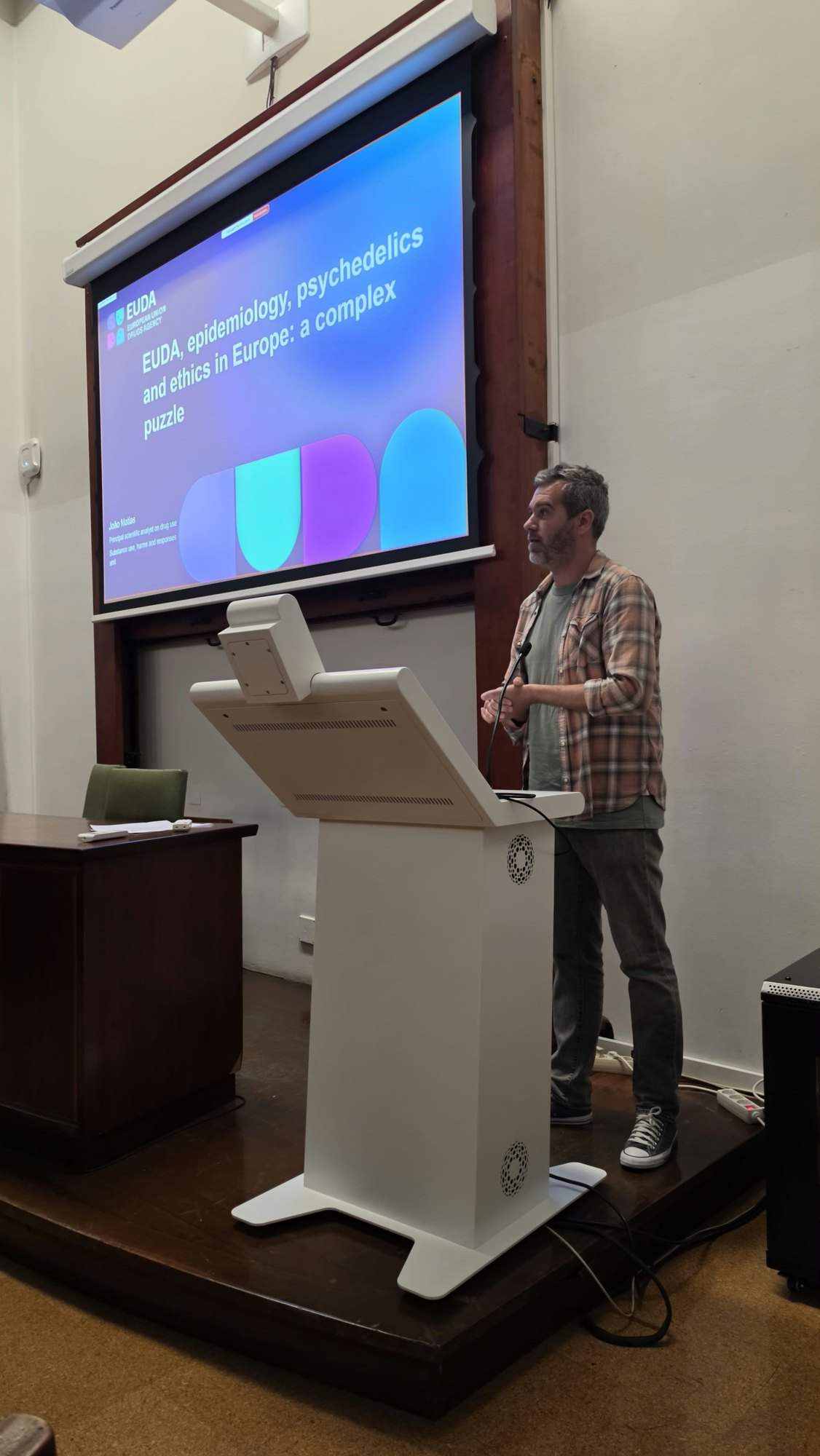
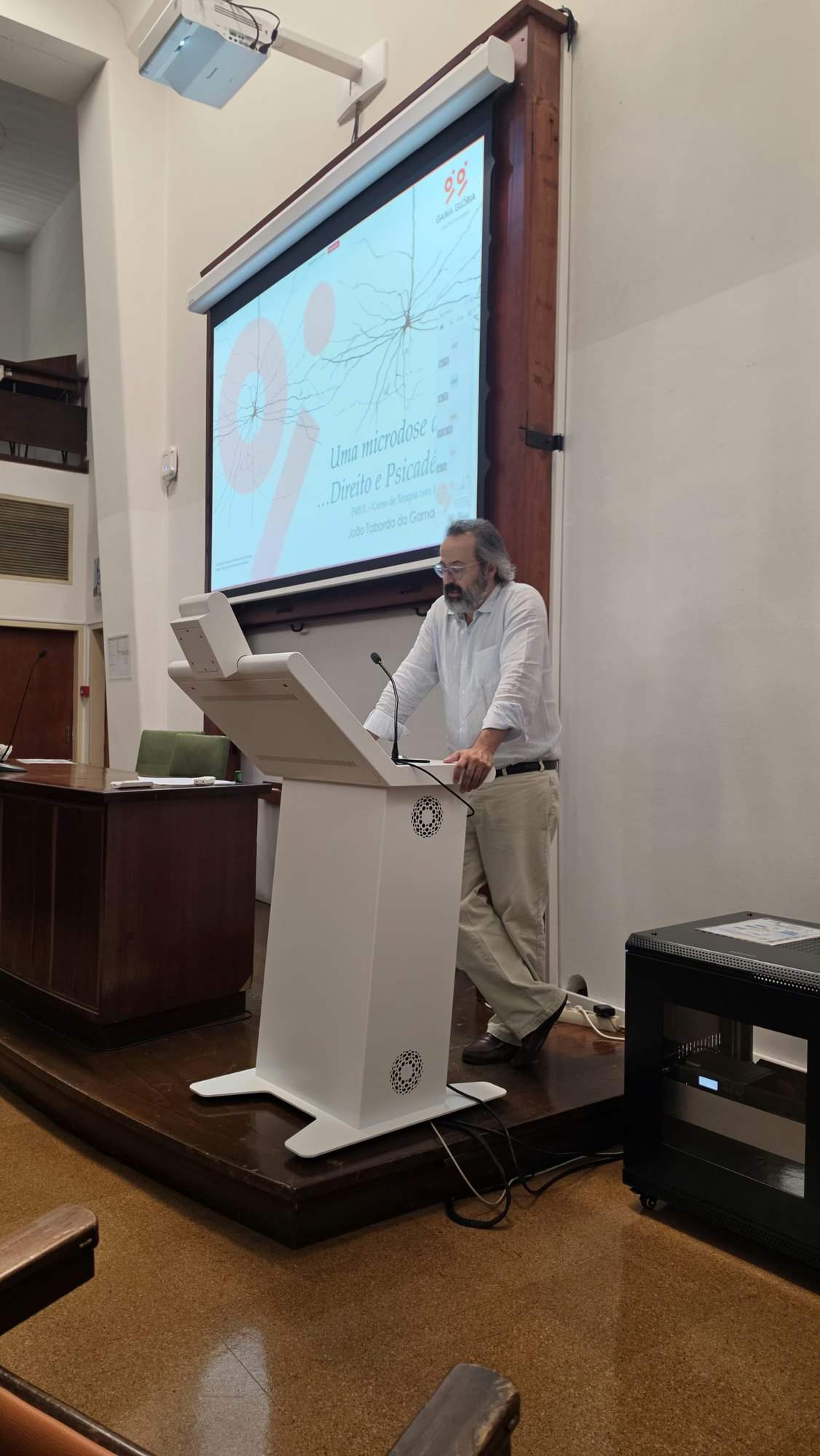
Law, regulation and the legal aspects of psychedelics were subjects addressed at the Faculty of Medicine of the University of Lisbon with João Taborda da Gama during the course “Introduction to Psychedelic Therapy: Research and Clinical Practice”. The course includes legal frameworks in a discussion that cannot be limited to pharmacology. This is a documented editorial synthesis, rather than a legal opinion or transcript.
João Taborda da Gama’s contribution
João Taborda da Gama is a lawyer and lecturer at the Portuguese Catholic University’s Faculty of Law. His institutional biography lists law degrees from the University of Lisbon, research experience at NYU and Georgetown, and teaching in controlled-substance regulation and medicines law. Catholic University — institutional profile.
The relevance of this career lies at the intersection of rules, institutions and practical decisions. Clinical innovation needs a framework that makes responsibilities identifiable. Knowing who may do what, with which product and under whose supervision is part of the quality of care.
Decriminalisation does not authorise treatment
Portugal’s Law No. 30/2000 establishes its response to drug use and acquisition and possession for personal use. That framework does not itself authorise a clinic to provide controlled substances as treatment. Diário da República — Law No. 30/2000.
Decree-Law No. 15/93 establishes the framework for controlling narcotic drugs and psychotropic substances. Applying it requires consulting the version in force and relevant schedules, including legislative amendments. Diário da República — legislation and consolidated text.
These are different legal dimensions. Rules about the consequences of personal use do not answer questions about manufacturing, importing, distributing or administering a substance within healthcare. Confusing them can create false expectations for patients and serious responsibilities for professionals.
Research, authorisation and use follow different pathways
A clinical trial asks a question through a defined protocol. Marketing authorisation concerns a medicine and its approved conditions. Use outside approved indications involves a different analysis. None of these categories should be presented as a generic permission covering any substance.
At European level, the Clinical Trials Regulation establishes specific rules for research involving medicines in humans. The CTIS system is the single entry point for submitting and assessing clinical-trial applications. European Commission — clinical trials.
Communicating about an intervention benefits from separating four questions: is there evidence? Is there a relevant authorisation? Are the professional and institutional conditions in place? Is the intervention actually available at the service concerned? A positive answer to the first does not automatically resolve the others. On our scientific evidence page we separate what is under research, what has positive results and what is approved.
Regulation also protects the therapeutic relationship
The legal debate extends beyond the status of a molecule. It includes patient information, consent, professional qualifications, data protection and responses to incidents. These dimensions should be clear before an intervention and understandable to people seeking care.
As an editorial reflection, public communication should enable someone to understand whom they are contacting, what assessment they are requesting and where the service’s limits lie. The phrase “psychedelic therapy” should not replace that explanation. A broad name can cover very different practices; a specific framework makes responsibilities assessable.
What foreign decisions actually change
In Australia, access to MDMA for post-traumatic stress disorder and psilocybin for treatment-resistant depression acquired a specific pathway for authorised psychiatrists from 1 July 2023. This is a framework with its own conditions, rather than universal authorisation. Therapeutic Goods Administration (TGA) — official information.
This example should be described through its jurisdiction, indication and conditions. An Australian decision should not be used to announce availability in Portugal. International comparison helps explain regulatory options; it does not replace consultation with the competent authorities. Within the European Union, Czechia has allowed the medical use of psilocybin in justified cases since 1 January 2026. Act No. 270/2025 Coll. restricts it to healthcare facilities, psychiatrists and adults, under special supervision. Government Regulation No. 552/2025 Coll. defines those cases: depressive disorder associated with cancer, clinically severe depressive disorder without psychotic symptoms, or a sudden worsening of another serious mental disorder that seriously threatens life, where justified by scientific evidence; in every case only after authorised medicines have not worked or were not tolerated, by mouth and following the national clinical guideline. We found no official data on how the scheme is working in practice.
University education for a responsible debate
The European Medicines Agency (EMA) brought together patients, professionals, researchers and regulators at a workshop on psychedelics in 2024. It addressed development, assessment and regulatory challenges; holding the event did not constitute medicine approval. EMA — workshop and documentation.
Including these subjects in the FMUL course connects scientific innovation with institutional responsibility. João Taborda da Gama’s contribution places law within the clinical debate: a tool for making decisions justifiable, limits explicit and care relationships more transparent.
This article provides general educational information. It does not replace legal analysis of an individual situation or announce KETAMED services or authorisations for the substances discussed.