
On 13 December 2023, the newspaper Público reported that SICAD, at the time Portugal’s Service for Intervention in Addictive Behaviours and Dependencies, had published a thematic dossier on the possible therapeutic use of substances that are illicit drugs in Portugal. The report, by Amílcar Correia, was headlined “São drogas ilícitas que podem ter benefícios terapêuticos. SICAD decidiu avaliá-las” (“They are illicit drugs that may have therapeutic benefits. SICAD has decided to assess them”).
What was decided?
Despite the headline, the report does not describe a formal assessment process or a change in the rules. It describes two things: the publication of the dossier “Drogas: Utilizações Terapêuticas”, which brings together texts by several experts and is aimed at professionals and the general public; and a challenge from SICAD to the scientific and academic community, this time focused not on risks and harms but on the possible therapeutic benefits of some illicit drugs, particularly in the treatment of some addictions.
According to the report, the dossier covers the scientific evidence, the associated risks and the state of knowledge on the clinical administration of substances such as MDMA, psilocybin, cannabis and a dissociative anaesthetic with psychedelic properties.
Why did it do so?
SICAD’s director-general, João Goulão, explained that the publication reflected the topicality of the subject and that “it is important for these experiences to be given a framework” (our translation), so as to produce scientific knowledge that confirms, or not, the value of these substances. He linked the challenge to the growing integration of psychedelics into health systems and to the search for new forms of spirituality and alternative medicine.
What results and examples does it mention?
According to the journalist’s text, studies suggest some efficacy of these substances in severe psychiatric conditions in which conventional treatments have not worked and that, if their potential is confirmed, some may be approved, for example for post-traumatic stress disorder or treatment-resistant depression.
As a Portuguese example, it reports that the dissociative anaesthetic was being studied with psychological support, in people with treatment-resistant depression, at Hospital Beatriz Ângelo since 2021 and at the Centro Hospitalar Psiquiátrico de Lisboa since 2022, and that two hospitals in Porto, Hospital de Magalhães Lemos and the Centro Hospitalar e Universitário de São João, were preparing to do the same. What is known today about ketamine and esketamine is summarised on a page of its own. On ayahuasca, the authors of the relevant chapter describe clinical research that is still at a very early stage, but refer to extensive evidence that it is pharmacologically safe in healthy users and to open-label and randomised trials suggesting a fast-acting antidepressant effect.
What caveats does it give?
One of the dossier’s authors, the psychiatrist Pedro Mota, describes psychedelic-assisted psychotherapy as an intervention that is both pharmacological and psychological, with a prior medical assessment and three phases: preparation, dosing and integration. He added that, at the time, “there is still not enough scientific evidence for regulators to have approved the clinical use of any psychedelic substance” (our translation), so these interventions should be regarded as experimental. Vasco Calado, of SICAD, notes that they could only become a therapeutic resource after completing every stage of approval by the competent authorities.
What it means in Portugal
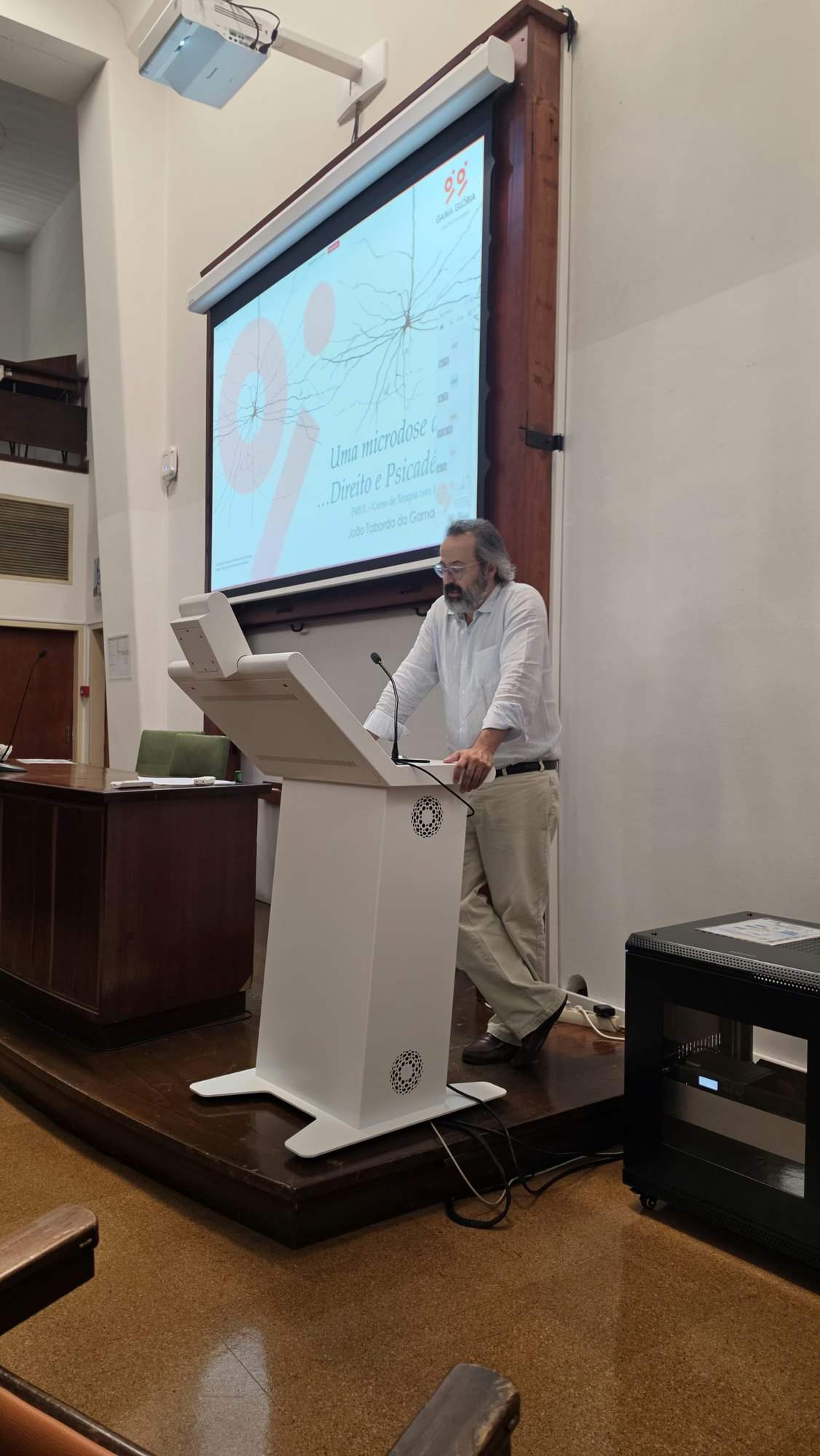
KETAMED commentary. The dossier is available in open access in the Repositório Comum. Shortly after the report, SICAD was merged out of existence and replaced by the Institute for Addictive Behaviours and Dependencies (ICAD), created by Decree-Law 89/2023 and operating since 1 January 2024.
Reviewing therapeutic potential does not change legal status. Psilocybin and MDMA remain in schedule II-A of Decree-Law 15/93 and are not authorised as medicines; outside authorised clinical trials, such as the psilocybin trial in palliative care with a site in Lisbon, they are not available as treatment. The Portuguese Medicines Statute provides for exceptional mechanisms of INFARMED, Portugal’s National Authority of Medicines and Health Products, such as the exceptional use authorisation, but these are a different matter: they require a case-by-case application and authorisation, with special conditions for controlled substances, and we found no public record of their use for these substances in Portugal.
On our scientific evidence page we separate what is under research, what has positive results but is still experimental and what is actually approved.