

DMT and ayahuasca
DMT (N,N-dimethyltryptamine) is a psychedelic molecule of the tryptamine family, found in many plants and animals [1]. Ayahuasca is a traditional Amazonian brew that contains DMT along with other plant compounds that make it active when swallowed. So DMT vs ayahuasca is a single molecule whose effects last minutes against a plant preparation whose effects last several hours.
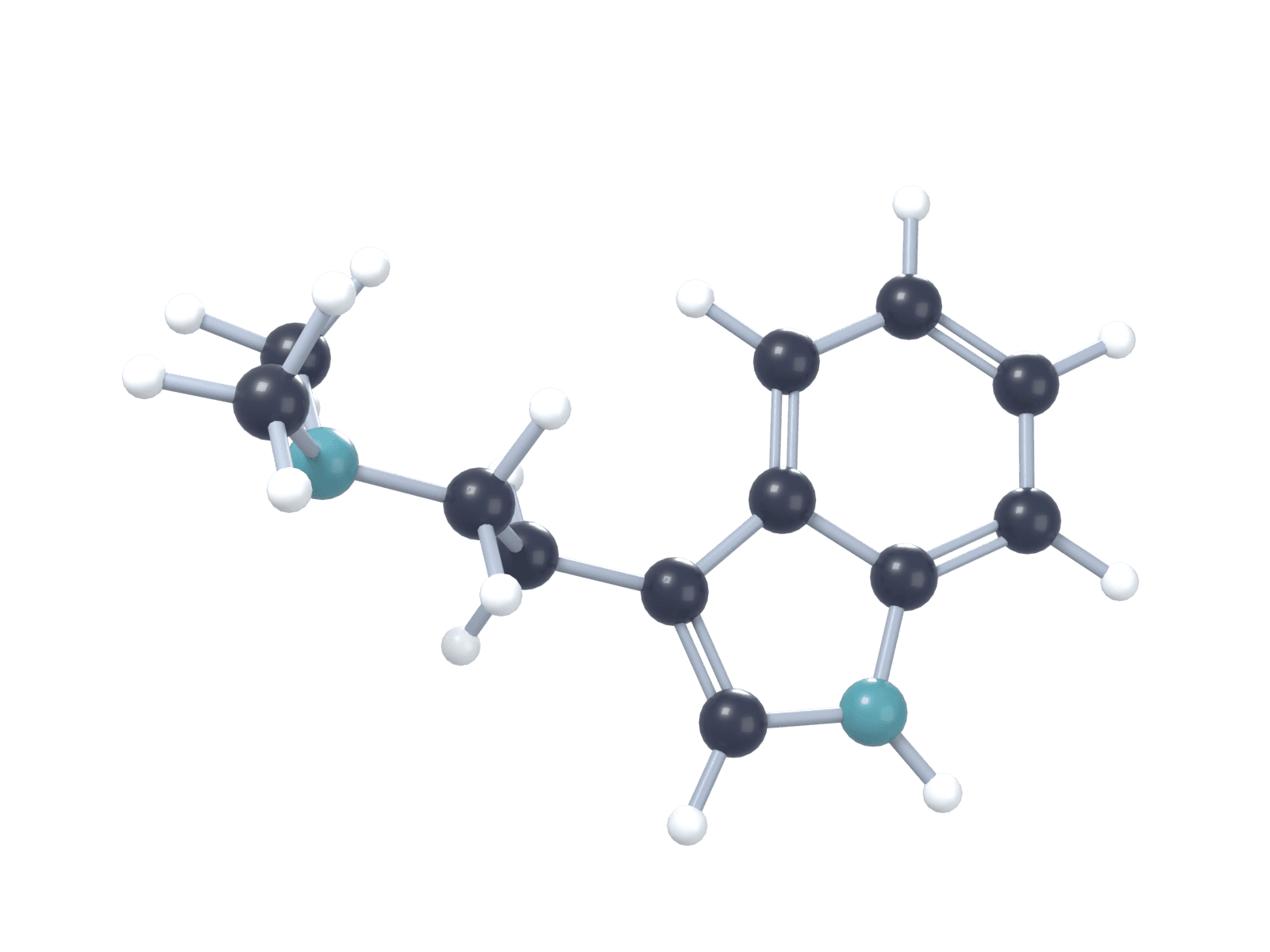
Drag to rotate.
DMT vs ayahuasca: what is the difference?
DMT is a defined chemical. Ayahuasca is a plant decoction whose make-up varies with the species used and how it is prepared [2] [3].
- Plants. The best-known recipe combines the vine Banisteriopsis caapi, which supplies the harmala alkaloids (harmine, harmaline and tetrahydroharmine), with leaves of Psychotria viridis, which supply the DMT [2].
- Why they are combined. Swallowed alone, DMT is broken down by the enzyme MAO in the gut and liver; the harmala alkaloids inhibit MAO-A and let it reach the bloodstream [3] [4].
- Duration. Given intravenously, DMT acts within seconds and wears off within minutes [5]. Ayahuasca takes longer to start and its effects last about four hours [6] [7].
- Risks. Because it contains MAO inhibitors, ayahuasca carries interaction risks that inhaled or injected DMT does not share to the same degree [8].
So findings for one cannot simply be carried over to the other.
What is DMT- or ayahuasca-assisted therapy?
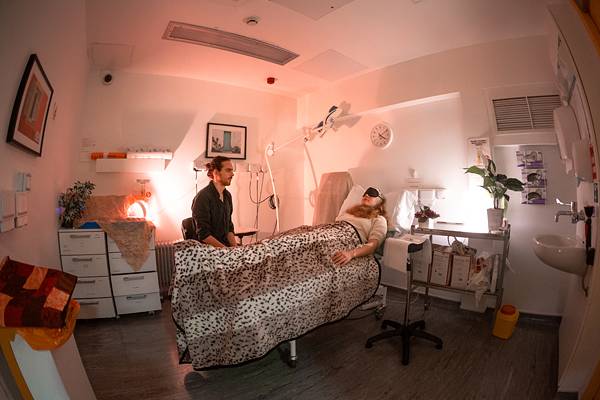
Re-enactment of a session in a DMT study (research setting)
It is a research protocol that combines careful medical screening, one or a few sessions with the substance in a controlled setting, and support from trained staff [9].
It includes preparation beforehand and integration sessions afterwards. For now it exists only in clinical studies: neither is authorised as a medicine in the European Union [10].
What is the history of DMT and ayahuasca?
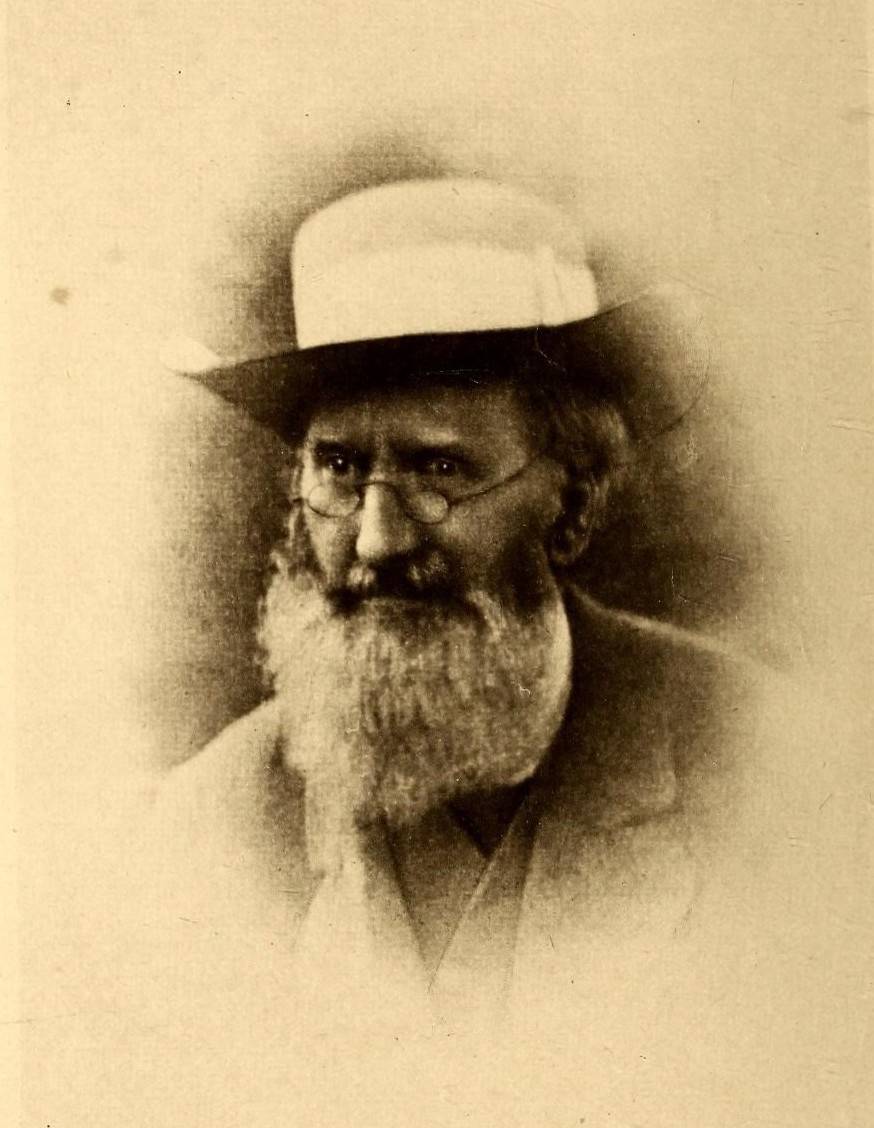
Richard Spruce, botanist who studied ayahuasca in the Amazon
Ayahuasca has a long history of traditional and religious use; DMT was only synthesised in the 20th century and studied in people from the 1950s.
- Traditional use. Indigenous peoples of the Amazon basin use ayahuasca for healing and spiritual purposes [7].
- 1931. The chemist Richard Manske synthesises DMT, without testing its effects in humans [11].
- 1930s. Ayahuasca enters religious use in Brazil; several syncretic churches now take it as a sacrament [7] [3].
- 1946. Oswaldo Gonçalves de Lima identifies DMT in a plant while studying the “jurema wine” of the Pankararu people of Pernambuco [12].
- 1956. The Hungarian psychiatrist Stephen Szára describes the psychedelic effects of DMT after injecting himself [13].
- 1971. DMT is placed in Schedule I of the UN Convention on Psychotropic Substances [14].
- 1994. Rick Strassman, in the United States, publishes studies of intravenous DMT in volunteers [15].
- 2015–2026. Clinical studies in depression: ayahuasca in Brazil [16] [7] and DMT in the UK [9].
How do DMT and ayahuasca work?
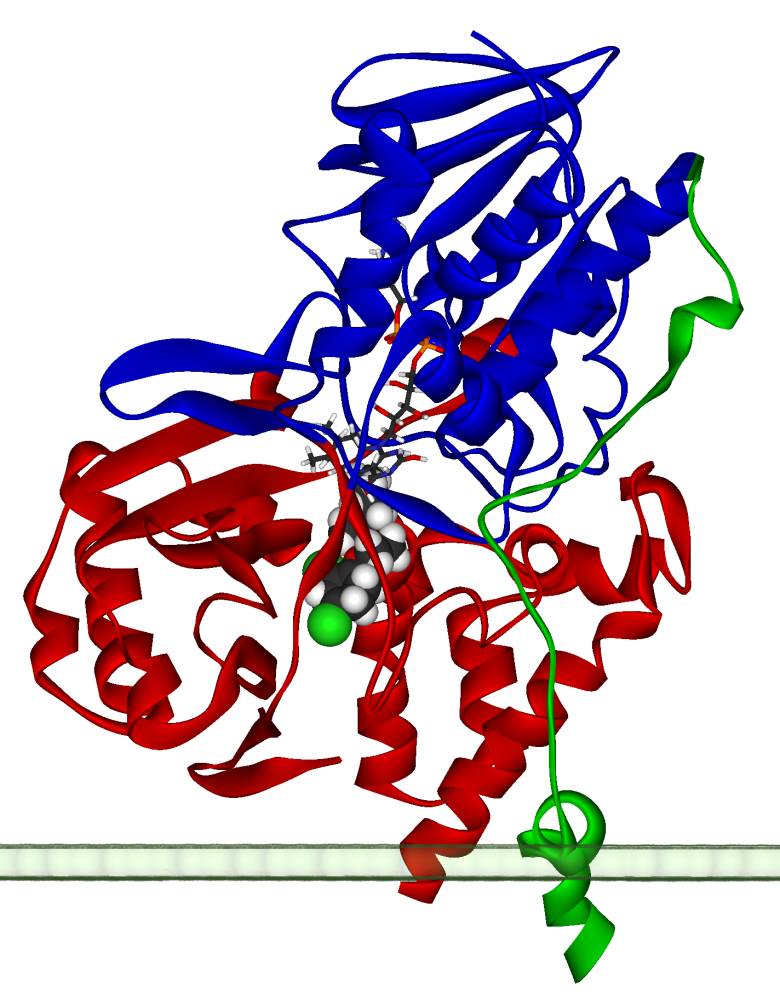
Monoamine oxidase A, MAO-A (molecular structure)
DMT acts mainly on the serotonin 5-HT2A receptor, the shared target of the classic psychedelics [17]. The body clears it very quickly, which is why the effect of an injection is so brief [9].
In ayahuasca, the harmala alkaloids block the breakdown of DMT mainly in the gut and liver; the effects track the rise of DMT in the blood [6].
Imaging and EEG studies show changes in brain activity during the experience [18] [19]. They describe what changes in the brain, but do not yet explain why symptoms improve.
How are study sessions run?
Sessions take place in hospital or research settings, after a medical assessment and under continuous supervision.
- Ayahuasca. A single dose in a quiet, dimly lit room with music chosen in advance; investigators close by and a further psychiatric assessment at the end [7].
- Intravenous DMT. An overnight hospital stay, preparation with two therapists the day before, a short infusion with the therapists present, and integration sessions over the following days and weeks [9].
- Medication. Psychiatric medicines are stopped weeks before the session, with a longer gap for MAO inhibitors [9].
- Other forms. Inhaled DMT [8] and continuous infusion, which extends the experience [20], are also being studied.
Which conditions are they being researched in?
Depression is the most researched area, with both ayahuasca and DMT. The studies are still small and short.
| Condition | Where it has been studied | Evidence | Phase |
|---|---|---|---|
| Treatment-resistant depression | Ayahuasca in Brazil [7]; inhaled DMT [8] | Controlled trials, still limited | Phase 2 |
| Major depressive disorder | Intravenous DMT in the UK [9] | Controlled trials, still limited | Phase 2 |
| Recurrent depression | Ayahuasca in Brazil, open-label studies [16] [19] | Preliminary | Exploratory |
| Addiction | Hypothesis from members of ayahuasca churches [3] | No clinical trials | Exploratory |
In the controlled trials, symptoms improved more than with placebo over the following days and weeks [7] [9]. A secondary analysis also reported less suicidal ideation, which needs confirming [21].
What are the risks and interactions?
In clinical settings, side effects were mostly short-lived. The most serious risk is ayahuasca interacting with antidepressants.
- Ayahuasca. Nausea and vomiting are common [7]; blood pressure may rise slightly [6].
- Intravenous DMT. Pain at the infusion site, nausea, short-lived anxiety and transient rises in blood pressure and heart rate, with no serious adverse events in the trial [9] [15].
- Interactions. Combined with serotonergic antidepressants, the MAO inhibitors in ayahuasca can cause serotonin syndrome, which may be serious [22]. Any medicine or supplement should be reviewed by a doctor.
- Who is left out. Studies exclude people with psychosis or bipolar disorder (personal or family history), pregnancy, significant physical illness or suicide risk; safety in these groups is unknown [7] [9] [23].
- Outside clinical settings. In a large international survey, most people who had drunk ayahuasca reported acute physical effects, mainly vomiting, and a small minority later needed medical care [24]. In a brew prepared outside a study, the make-up is unknown [3].
What is the legal status?
DMT is a controlled substance internationally and in Portugal. No medicine containing DMT or ayahuasca is authorised in the European Union.
- International. DMT is in Schedule I of the 1971 Convention [14] [25]. Plants and brews made from them, such as ayahuasca, are not under international control, but the control board has recommended that governments consider controlling them nationally [26].
- Portugal. DMT is listed in Table II-A of Decree-Law 15/93 [27]. How the law applies to a drink containing DMT is a legal question this page does not settle. Decriminalising personal use does not make the substances legal [28].
- European Union. No medicine containing DMT or ayahuasca is authorised or under evaluation at the European Medicines Agency (checked October 2026) [10].
- Brazil. Religious use of ayahuasca has had its own rules since 2010; this is not a medicines authorisation [29].
What is still being researched
The next studies aim to confirm the early results and answer practical questions.
- Whether the results hold up in larger, longer trials [7] [9].
- How long any benefit lasts [9].
- How much of the effect reflects expectation, since the effects are hard to mask [30].
- What part psychological support plays in the outcome [9].
- Whether what is learnt from pure DMT applies to ayahuasca, whose composition varies [3].
- How both behave in people currently excluded from studies and in those taking other medicines.
Content reviewed by the KETAMED® clinical team, under medical direction, on .
References
30
- Cameron LP, Olson DE. Dark classics in chemical neuroscience: N,N-dimethyltryptamine (DMT). ACS Chem Neurosci. 2018;9(10):2344–2357. doi:10.1021/acschemneuro.8b00101 (opens in a new tab)Review
- McKenna DJ, Towers GH, Abbott F. Monoamine oxidase inhibitors in South American hallucinogenic plants: tryptamine and beta-carboline constituents of ayahuasca. J Ethnopharmacol. 1984;10(2):195–223. doi:10.1016/0378-8741(84)90003-5 (opens in a new tab)Study
- McKenna DJ. Clinical investigations of the therapeutic potential of ayahuasca: rationale and regulatory challenges. Pharmacol Ther. 2004;102(2):111–129. doi:10.1016/j.pharmthera.2004.03.002 (opens in a new tab)Review
- Callaway JC, McKenna DJ, Grob CS, et al. Pharmacokinetics of Hoasca alkaloids in healthy humans. J Ethnopharmacol. 1999;65(3):243–256. doi:10.1016/s0378-8741(98)00168-8 (opens in a new tab)Study
- Strassman RJ, Qualls CR, Uhlenhuth EH, Kellner R. Dose-response study of N,N-dimethyltryptamine in humans. II. Subjective effects and preliminary results of a new rating scale. Arch Gen Psychiatry. 1994;51(2):98–108. doi:10.1001/archpsyc.1994.03950020022002 (opens in a new tab)Clinical trial
- Riba J, Valle M, Urbano G, et al. Human pharmacology of ayahuasca: subjective and cardiovascular effects, monoamine metabolite excretion, and pharmacokinetics. J Pharmacol Exp Ther. 2003;306(1):73–83. doi:10.1124/jpet.103.049882 (opens in a new tab)Clinical trial
- Palhano-Fontes F, Barreto D, Onias H, et al. Rapid antidepressant effects of the psychedelic ayahuasca in treatment-resistant depression: a randomized placebo-controlled trial. Psychol Med. 2019;49(4):655–663. doi:10.1017/S0033291718001356 (opens in a new tab)Clinical trial
- Falchi-Carvalho M, Palhano-Fontes F, Wießner I, et al. Rapid and sustained antidepressant effects of vaporized N,N-dimethyltryptamine: a phase 2a clinical trial in treatment-resistant depression. Neuropsychopharmacology. 2025;50(6):895–903. doi:10.1038/s41386-025-02091-6 (opens in a new tab)Clinical trial
- Erritzoe D, Barba T, Benway T, et al. A short-acting psychedelic intervention for major depressive disorder: a phase IIa randomized placebo-controlled trial. Nat Med. 2026;32:591–598. doi:10.1038/s41591-025-04154-z (opens in a new tab)Clinical trial
- European Medicines Agency. Medicines data download (human medicines: authorised, refused, withdrawn and under evaluation), consulted October 2026: no medicine containing DMT or ayahuasca listed. ema.europa.eu (opens in a new tab)Regulatory source
- Manske RHF. A synthesis of the methyltryptamines and some derivatives. Can J Res. 1931;5(5):592–600. doi:10.1139/cjr31-097 (opens in a new tab)Study
- Barker SA. N,N-Dimethyltryptamine (DMT), an endogenous hallucinogen: past, present, and future research to determine its role and function. Front Neurosci. 2018;12:536. doi:10.3389/fnins.2018.00536 (opens in a new tab)Review
- Szára S. Dimethyltryptamin: its metabolism in man; the relation to its psychotic effect to the serotonin metabolism. Experientia. 1956;12(11):441–442. doi:10.1007/BF02157378 (opens in a new tab)Study
- United Nations. Convention on Psychotropic Substances, 1971 (Vienna), with its schedules as amended. unodc.org (PDF) (opens in a new tab)Legislation
- Strassman RJ, Qualls CR. Dose-response study of N,N-dimethyltryptamine in humans. I. Neuroendocrine, autonomic, and cardiovascular effects. Arch Gen Psychiatry. 1994;51(2):85–97. doi:10.1001/archpsyc.1994.03950020009001 (opens in a new tab)Clinical trial
- Osório FL, Sanches RF, Macedo LR, et al. Antidepressant effects of a single dose of ayahuasca in patients with recurrent depression: a preliminary report. Braz J Psychiatry. 2015;37(1):13–20. doi:10.1590/1516-4446-2014-1496 (opens in a new tab)Clinical trial
- Nichols DE. Psychedelics. Pharmacol Rev. 2016;68(2):264–355. doi:10.1124/pr.115.011478 (opens in a new tab)Review
- Timmermann C, Roseman L, Schartner M, et al. Neural correlates of the DMT experience assessed with multivariate EEG. Sci Rep. 2019;9:16324. doi:10.1038/s41598-019-51974-4 (opens in a new tab)Study
- Sanches RF, de Lima Osório F, Dos Santos RG, et al. Antidepressant effects of a single dose of ayahuasca in patients with recurrent depression: a SPECT study. J Clin Psychopharmacol. 2016;36(1):77–81. doi:10.1097/JCP.0000000000000436 (opens in a new tab)Clinical trial
- Luan LX, Eckernäs E, Ashton M, et al. Psychological and physiological effects of extended DMT. J Psychopharmacol. 2024;38(1):56–67. doi:10.1177/02698811231196877 (opens in a new tab)Study
- Zeifman RJ, Singhal N, Dos Santos RG, et al. Rapid and sustained decreases in suicidality following a single dose of ayahuasca among individuals with recurrent major depressive disorder: results from an open-label trial. Psychopharmacology (Berl). 2021;238(2):453–459. doi:10.1007/s00213-020-05692-9 (opens in a new tab)Study
- Callaway JC, Grob CS. Ayahuasca preparations and serotonin reuptake inhibitors: a potential combination for severe adverse interactions. J Psychoactive Drugs. 1998;30(4):367–369. doi:10.1080/02791072.1998.10399712 (opens in a new tab)Study
- Johnson MW, Richards WA, Griffiths RR. Human hallucinogen research: guidelines for safety. J Psychopharmacol. 2008;22(6):603–620. doi:10.1177/0269881108093587 (opens in a new tab)Guidance
- Bouso JC, Andión Ó, Sarris JJ, et al. Adverse effects of ayahuasca: results from the Global Ayahuasca Survey. PLOS Glob Public Health. 2022;2(11):e0000438. doi:10.1371/journal.pgph.0000438 (opens in a new tab)Study
- International Narcotics Control Board. Green List: list of psychotropic substances under international control, in accordance with the Convention on Psychotropic Substances of 1971. 36th edition, 2025 (DMT listed in Schedule I). incb.org (opens in a new tab)Regulatory source
- International Narcotics Control Board. Report of the International Narcotics Control Board for 2010 (E/INCB/2010/1). Paragraphs 284–287 (plant material containing psychoactive substances) and 500 (Brazil, ayahuasca for religious purposes). incb.org (PDF) (opens in a new tab)Regulatory source
- Decreto-Lei n.º 15/93, de 22 de Janeiro: regime jurídico do tráfico e consumo de estupefacientes e substâncias psicotrópicas (tabelas anexas), na redacção actual, incluindo as alterações da Lei n.º 23/2025. (Decree-Law 15/93 of 22 January: Portugal’s legal regime on trafficking and use of narcotic and psychotropic substances (annexed schedules), as currently amended, including by Law 23/2025.) diariodarepublica.pt (versão consolidada) (opens in a new tab)Legislation
- Lei n.º 30/2000, de 29 de Novembro: regime jurídico aplicável ao consumo de estupefacientes (descriminalização do consumo; não legaliza as substâncias). (Law 30/2000 of 29 November: the legal regime for drug use in Portugal (decriminalises personal use; does not legalise the substances).) diariodarepublica.pt (PDF) (opens in a new tab)Legislation
- Conselho Nacional de Políticas sobre Drogas (CONAD, Brasil). Resolução n.º 1, de 25 de Janeiro de 2010, sobre o uso religioso da ayahuasca; citada como referência na ata da 1.ª reunião ordinária do CONAD de 2025 (Ministério da Justiça e Segurança Pública). (Brazil’s National Council on Drug Policy (CONAD). Resolution No. 1 of 25 January 2010 on the religious use of ayahuasca; cited as the reference in the minutes of CONAD’s first ordinary meeting of 2025 (Ministry of Justice and Public Security).) gov.br (PDF) (opens in a new tab)Regulatory source
- Muthukumaraswamy SD, Forsyth A, Lumley T. Blinding and expectancy confounds in psychedelic randomized controlled trials. Expert Rev Clin Pharmacol. 2021;14(9):1133–1152. doi:10.1080/17512433.2021.1933434 (opens in a new tab)Review