

Ketamine and esketamine
Ketamine is an anaesthetic medicine, in clinical use since 1970, that acts mainly by blocking the NMDA glutamate receptor. Esketamine is one of the two mirror-image forms that make up ketamine. Both have been studied in treatment-resistant depression, and esketamine nasal spray is authorised for that indication in the European Union.
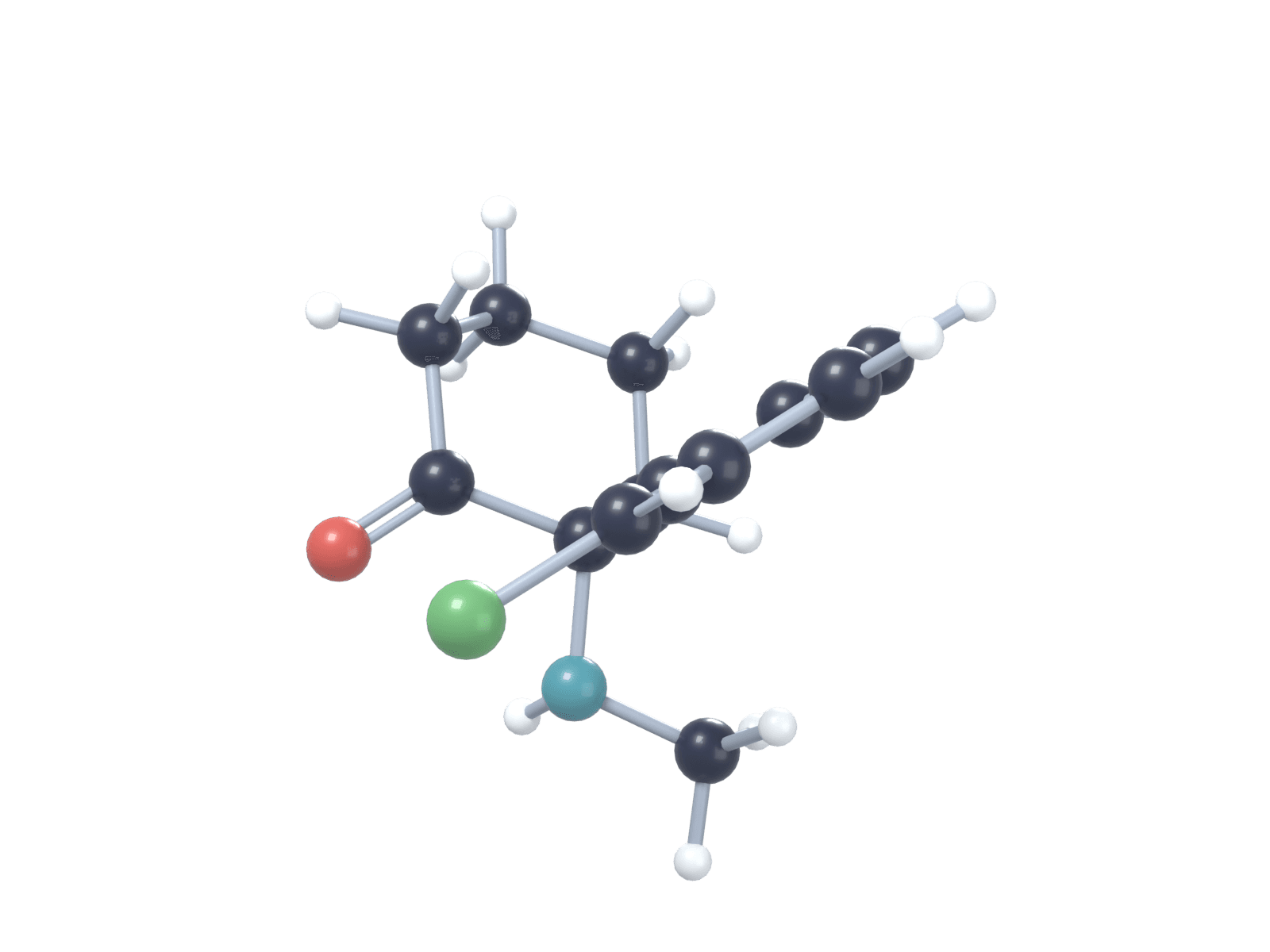
What is ketamine?
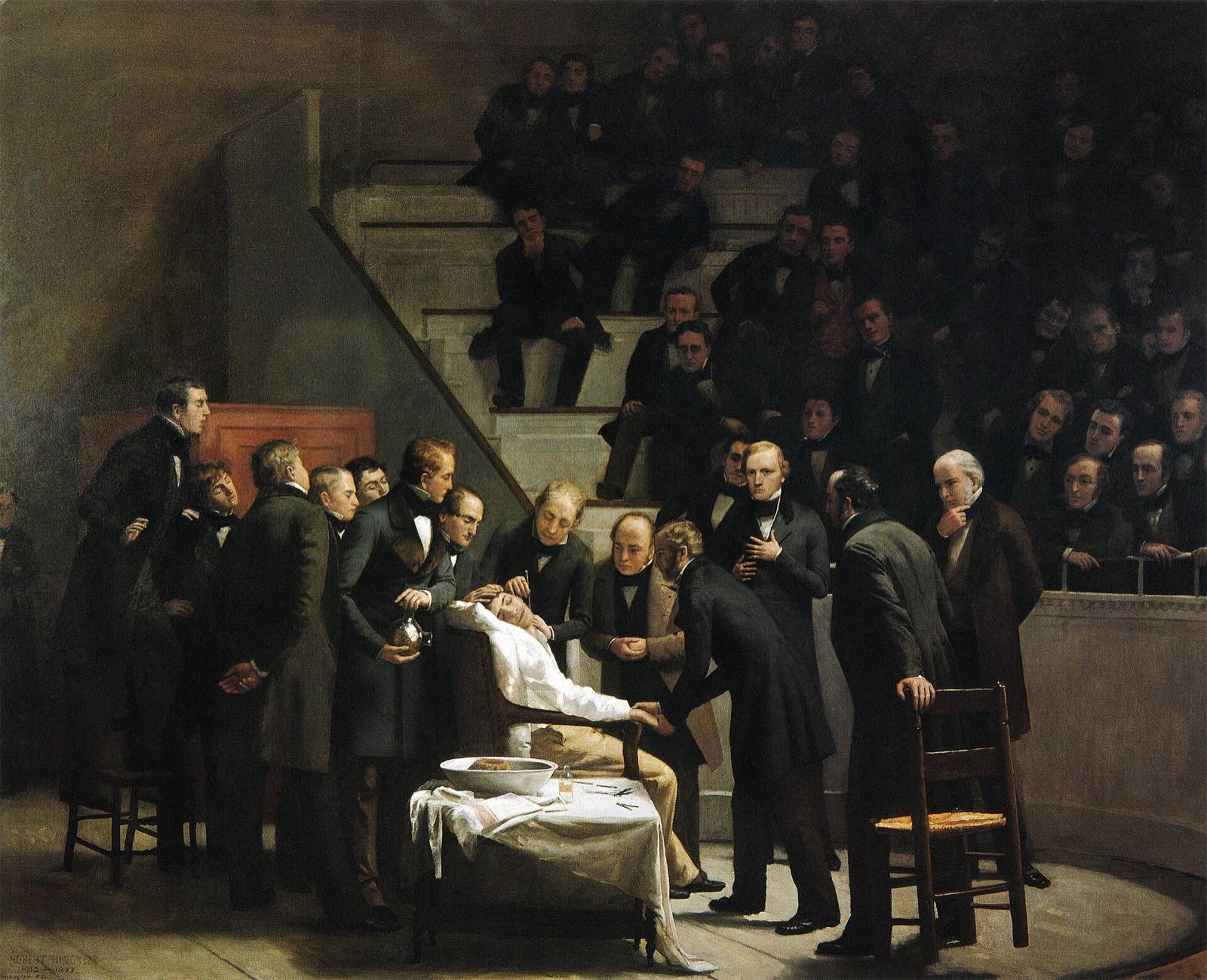
First operation under ether, Boston, 1846
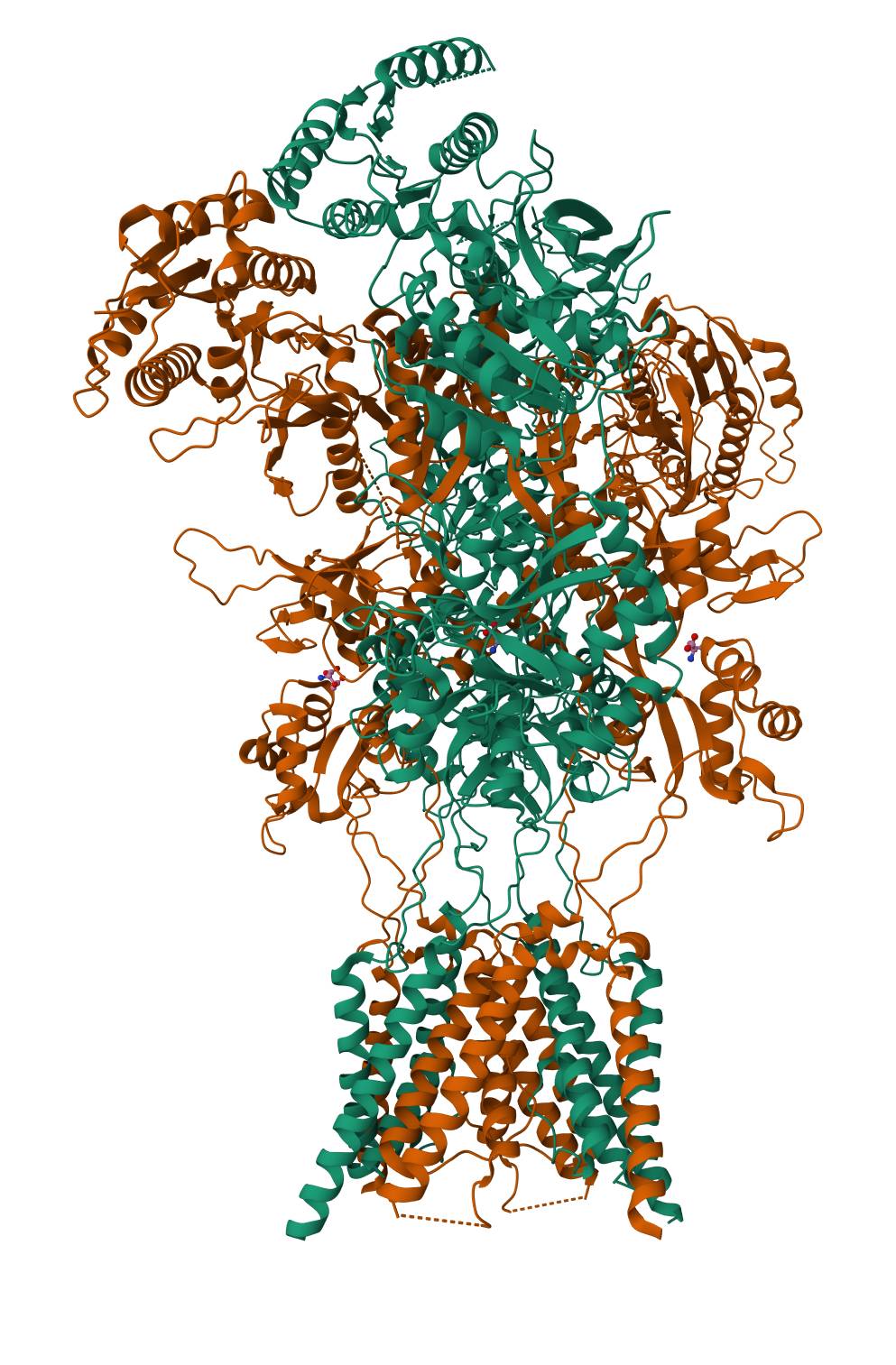
NMDA glutamate receptor (molecular structure)
Ketamine was first synthesised in 1962 [1] and has been in clinical use as an anaesthetic since 1970, mainly in hospital and emergency settings [2]. Below anaesthetic doses it produces a short-lived dissociative state, with changes in the perception of the body, space and time.
It acts mainly on the glutamate system by blocking the NMDA receptor. Research links this effect to rapid reorganisation of connections between neurons, a mechanism that is not yet fully understood [2].
Is it “ketamine” or “cetamina”?
They are the same substance. “Ketamine” is the English form of the international non-proprietary name; “cetamina” is the Portuguese form, used, for example, in the official Portuguese product information and by the Portuguese Medical Association [3] [4]. The same applies to esketamine (“escetamina” in Portuguese).
What is esketamine?
The ketamine molecule exists in two forms that are mirror images of each other, the S and R enantiomers. The ketamine used in anaesthesia is an equal mixture of both (a racemic mixture); esketamine is the S form on its own [2].
Esketamine was developed as a medicine in its own right, as a nasal spray, for treatment-resistant depression [3]. Because the formulations, routes of administration and authorisations differ, results for one do not automatically apply to the other.
Research in treatment-resistant depression
Depression is called treatment-resistant when symptoms persist despite at least two adequate antidepressant treatments, in dose and duration. Usual antidepressants take weeks to work.
In 2000, a small controlled trial reported an improvement in depressive symptoms within hours of a single ketamine infusion [5], a result confirmed in 2006 in people with treatment-resistant depression [6]. Since then, trials and meta-analyses have confirmed a rapid antidepressant effect [7], and a randomised trial compared ketamine with electroconvulsive therapy in treatment-resistant depression without psychosis [8]. Trials of esketamine nasal spray, combined with an oral antidepressant, supported its authorisation [9] [10], and one trial compared it with quetiapine [11].
The evidence has important limits:
- the effect of each administration is usually short-lived [12], and a Cochrane review considers it not entirely clear how the results translate into clinical practice [13];
- dissociative effects make blinding hard to maintain in trials, because participants often notice whether they received the active substance;
- there are few long-term studies, and doses, intervals and routes of administration vary widely between studies.
What does off-label use of ketamine mean?
Each medicine is authorised for indications, doses, ages and routes of administration defined in its summary of product characteristics (SmPC). Using it outside those terms is off-label use, that is, outside the approved indications [14].
European and Portuguese medicines law regulates marketing authorisation, manufacturing and advertising [15] [16]. It does not regulate how doctors prescribe, and EU law does not prohibit off-label prescribing [17]. In Portugal, such prescribing is an individual clinical decision, under the full responsibility of the physician, who must base it on scientific knowledge, explain it to the patient and obtain their informed consent [14] [18].
Advertising of a medicine must be consistent with the SmPC (article 150 of the Portuguese Medicines Statute), and prescription-only medicines may not be advertised to the public (article 152) [16]. Off-label use therefore cannot be promoted.
Off-label use exists in several areas of medicine; whether it is appropriate always depends on an individual medical assessment.
What is ketamine-assisted therapy?
In research, ketamine-assisted therapy combines ketamine sessions with structured psychotherapeutic support. The models described in the literature are usually organised in three phases [21] [12]:
- preparation: assessment, setting goals and explaining the expected effects;
- session: administration in a clinical setting, with monitoring and a therapist present;
- integration: later sessions to make sense of what came up during the experience and relate it to everyday life.
“Ketamine therapy” is sometimes used more broadly, for any therapeutic administration with or without psychotherapy. Studies of the combination are still few and small, and it has not been established that the psychotherapeutic component increases or prolongs the effect [12].
Safety, contraindications and monitoring
According to the esketamine SmPC, the most common effects are dizziness, dissociation, nausea, headache, somnolence, altered taste, vertigo, reduced sensation, vomiting and increased blood pressure [3]. Ketamine trials mainly describe dissociation and a transient rise in blood pressure [7].
- Monitoring: for esketamine, blood pressure is measured before administration and about 40 minutes afterwards, and the person stays under the supervision of a healthcare professional until clinically stable. They should not drive or operate machinery until the next day, after a night’s sleep [3].
- Contraindications: conditions in which a rise in blood pressure or intracranial pressure poses a serious risk, such as aneurysmal vascular disease, previous intracerebral haemorrhage or a cardiovascular event in the previous six weeks, including myocardial infarction; and hypersensitivity to esketamine or ketamine [3].
- Careful assessment: a history of psychosis, mania or bipolar disorder, uncontrolled hyperthyroidism and raised intracranial pressure; it is not recommended during pregnancy [3].
- Misuse: there is a risk of misuse and dependence, especially in people with a history of substance use; daily, long-term use of ketamine at high doses is associated with interstitial cystitis and with memory and cognitive impairment [3].
What is still being researched
After decades of use in anaesthesia and more than twenty years of research in depression, ongoing studies are working on several questions [7]:
- how long the benefit lasts and the safest way to maintain it;
- the most suitable dose, frequency and route of administration of ketamine in depression;
- the long-term effects of repeated administration, particularly on cognition, the bladder and the risk of misuse;
- which people are most likely to respond;
- whether accompanying psychotherapy adds benefit, and with which model [12].
Trial results describe group averages and cannot predict how each person will respond, which depends on an individual medical assessment.
Content reviewed by the KETAMED® clinical team, under medical direction, on .
References
21
- Li L, Vlisides PE. Ketamine: 50 years of modulating the mind. Front Hum Neurosci. 2016;10:612. doi:10.3389/fnhum.2016.00612 (opens in a new tab)Review
- Zanos P, Moaddel R, Morris PJ, et al. Ketamine and ketamine metabolite pharmacology: insights into therapeutic mechanisms. Pharmacol Rev. 2018;70(3):621–660. doi:10.1124/pr.117.015198 (opens in a new tab)Review
- European Medicines Agency. European public assessment report (EPAR) and product information for esketamine nasal spray; marketing authorisation in the EU since 18 December 2019. ema.europa.eu (opens in a new tab)Regulatory source
- Ordem dos Médicos, Colégio da Especialidade de Psiquiatria. Resolução sobre o uso de Psicadélicos (CEP-2023-R-02), 3 de Agosto de 2023. (Portuguese Medical Association, College of Psychiatry: resolution on the use of psychedelics, 3 August 2023.) ordemdosmedicos.pt (PDF) (opens in a new tab)Guidance
- Berman RM, Cappiello A, Anand A, et al. Antidepressant effects of ketamine in depressed patients. Biol Psychiatry. 2000;47(4):351–354. doi:10.1016/S0006-3223(99)00230-9 (opens in a new tab)Clinical trial
- Zarate CA Jr, Singh JB, Carlson PJ, et al. A randomized trial of an N-methyl-D-aspartate antagonist in treatment-resistant major depression. Arch Gen Psychiatry. 2006;63(8):856–864. doi:10.1001/archpsyc.63.8.856 (opens in a new tab)Clinical trial
- McIntyre RS, Rosenblat JD, Nemeroff CB, et al. Synthesizing the evidence for ketamine and esketamine in treatment-resistant depression: an international expert opinion on the available evidence and implementation. Am J Psychiatry. 2021;178(5):383–399. doi:10.1176/appi.ajp.2020.20081251 (opens in a new tab)Review
- Anand A, Mathew SJ, Sanacora G, et al. Ketamine versus ECT for nonpsychotic treatment-resistant major depression. N Engl J Med. 2023;388(25):2315–2325. doi:10.1056/NEJMoa2302399 (opens in a new tab)Clinical trial
- Popova V, Daly EJ, Trivedi M, et al. Efficacy and safety of flexibly dosed esketamine nasal spray combined with a newly initiated oral antidepressant in treatment-resistant depression: a randomized double-blind active-controlled study. Am J Psychiatry. 2019;176(6):428–438. doi:10.1176/appi.ajp.2019.19020172 (opens in a new tab)Clinical trial
- Daly EJ, Trivedi MH, Janik A, et al. Efficacy of esketamine nasal spray plus oral antidepressant treatment for relapse prevention in patients with treatment-resistant depression: a randomized clinical trial. JAMA Psychiatry. 2019;76(9):893–903. doi:10.1001/jamapsychiatry.2019.1189 (opens in a new tab)Clinical trial
- Reif A, Bitter I, Buyze J, et al. Esketamine nasal spray versus quetiapine for treatment-resistant depression. N Engl J Med. 2023;389:1298–1309. doi:10.1056/NEJMoa2304145 (opens in a new tab)Clinical trial
- Drozdz SJ, Goel A, McGarr MW, et al. Ketamine assisted psychotherapy: a systematic narrative review of the literature. J Pain Res. 2022;15:1691–1706. doi:10.2147/JPR.S360733 (opens in a new tab)Review
- Dean RL, Hurducas C, Hawton K, et al. Ketamine and other glutamate receptor modulators for depression in adults with unipolar major depressive disorder. Cochrane Database Syst Rev. 2021;9:CD011612. doi:10.1002/14651858.CD011612.pub3 (opens in a new tab)Review
- INFARMED (Autoridade Nacional do Medicamento e Produtos de Saúde), Comissão Nacional de Farmácia e Terapêutica. Utilização de medicamentos em regime off-label (orientação aprovada em Março de 2025). Cita a Circular Informativa n.º 184/CD, de 12 de Novembro de 2010: a utilização fora das indicações aprovadas «é da inteira responsabilidade do médico prescritor». (INFARMED (Portugal’s medicines authority), National Pharmacy and Therapeutics Committee. Guidance on off-label use of medicines (approved March 2025). It cites INFARMED Circular 184/CD of 12 November 2010: use outside the approved indications is the full responsibility of the prescribing physician.) infarmed.pt (PDF) (opens in a new tab)Guidance
- Directive 2001/83/EC of the European Parliament and of the Council of 6 November 2001 on the Community code relating to medicinal products for human use (consolidated). Title VIII: advertising must comply with the summary of product characteristics; advertising of prescription-only medicines to the general public is prohibited. eur-lex.europa.eu (opens in a new tab)Legislation
- Decreto-Lei n.º 176/2006, de 30 de Agosto: Estatuto do Medicamento, versão consolidada INFARMED. O artigo 152.º proíbe a publicidade junto do público de medicamentos sujeitos a receita médica e de medicamentos que contenham estupefacientes ou psicotrópicos. (Decree-Law 176/2006 of 30 August: the Portuguese Medicines Statute, consolidated INFARMED version. Article 152 prohibits advertising to the public of prescription-only medicines and of medicines containing narcotic or psychotropic substances.) infarmed.pt (PDF consolidado) (opens in a new tab)Legislation
- European Commission, Expert Group on Safe and Timely Access to Medicines for Patients (STAMP). Off-label use of medicinal products: background paper, 2017. EU legislation does not regulate how medicines are used in medical practice; citing the General Court (case T-452/14), off-label prescribing is not prohibited, or even regulated, by EU law. health.ec.europa.eu (PDF) (opens in a new tab)Regulatory source
- Ordem dos Médicos. Regulamento n.º 707/2016, de 21 de Julho: Regulamento de Deontologia Médica (Código Deontológico). Artigos 7.º (liberdade de escolha dos meios terapêuticos), 10.º (tratamentos condicionados), 19.º (esclarecimento) e 20.º (consentimento). (Portuguese Medical Association (Ordem dos Médicos). Regulation 707/2016 of 21 July: Code of Medical Ethics. Articles 7 (freedom to choose therapeutic means), 10 (conditional treatments), 19 (information to the patient) and 20 (patient consent).) diariodarepublica.pt (PDF) (opens in a new tab)Legislation
- U.S. Food and Drug Administration. Drugs@FDA: esketamine nasal spray, New Drug Application 211243 (approved March 2019; distribution restricted to certified healthcare settings). accessdata.fda.gov (opens in a new tab)Regulatory source
- U.S. Food and Drug Administration. Esketamine nasal spray, US prescribing information revised January 2025: adds use as monotherapy for treatment-resistant depression in adults. US labelling does not change EU or Portuguese indications. accessdata.fda.gov (opens in a new tab)Regulatory source
- Dore J, Turnipseed B, Dwyer S, et al. Ketamine assisted psychotherapy (KAP): patient demographics, clinical data and outcomes in three large practices administering ketamine with psychotherapy. J Psychoactive Drugs. 2019;51(2):189–198. doi:10.1080/02791072.2019.1587556 (opens in a new tab)Study